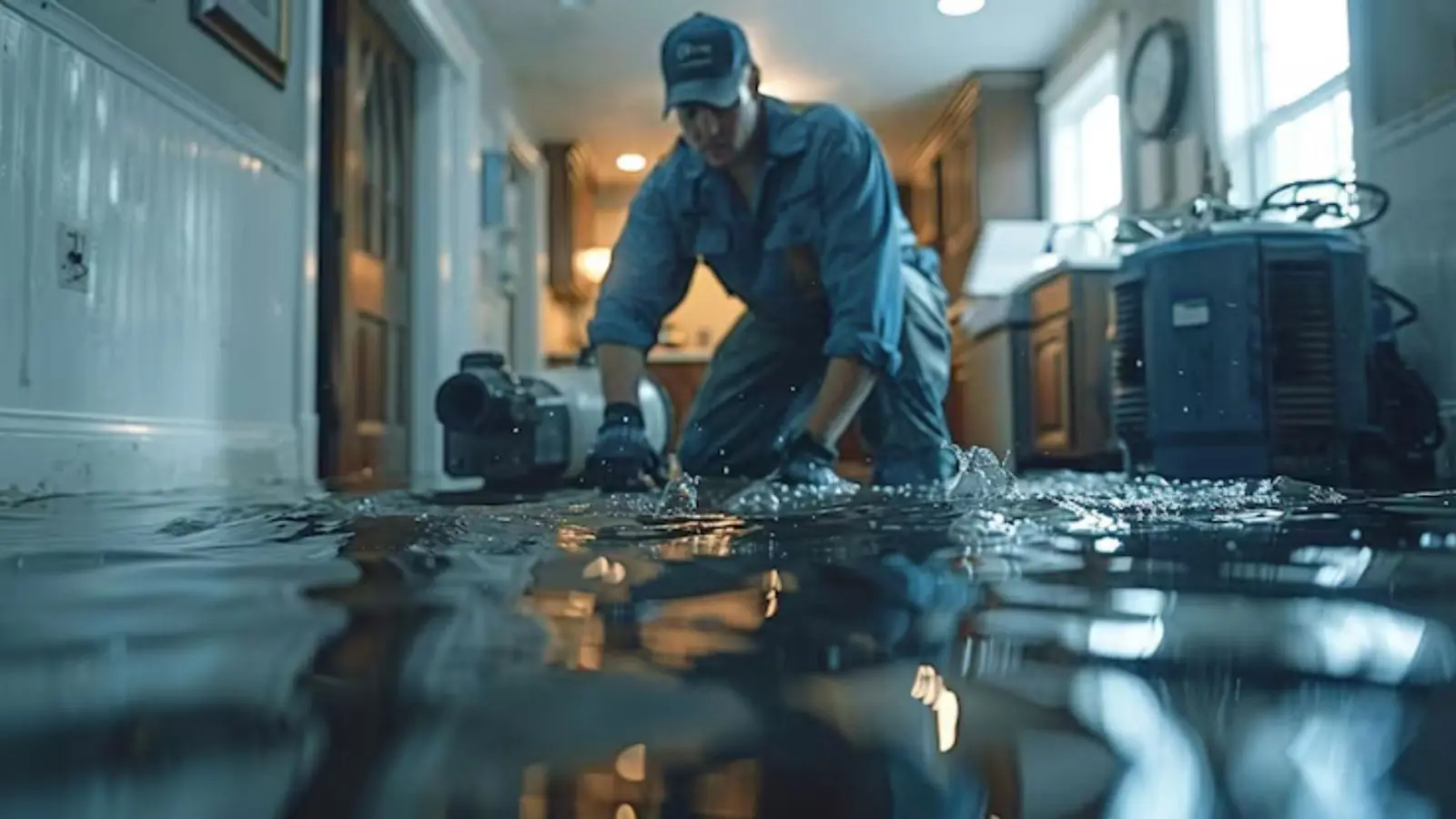
To fix flood damage in Addison, TX, the work moves through seven stages: make the house safe, document the loss, extract the water, tear out what cannot be saved, dry the structure, sanitize and then rebuild. Flood damage means water that came in from outside, such as surface water or a backed-up drain, and it is treated as contaminated.
The order protects you, your belongings and your insurance file. This guide explains each stage, who handles it, and how flood differs from an ordinary leak.
The seven stages at a glance
Some stages overlap, but none should be skipped or reversed. Rebuilding on damp framing is the costliest mistake on this list.
| Stage | What happens | Who does it |
|---|---|---|
| 1. Safety | Power, gas and water hazards are checked. Everyone stays out of standing water that touches outlets. | You first, then the utility or an electrician for any hazard |
| 2. Photos and records | Wide and close photos and video of water lines, damaged items and belongings, before anything is moved. | You, with the crew adding moisture readings |
| 3. Extraction | Pumps and wet vacuums pull out standing water and slurry. | Restoration crew |
| 4. Tear-out | Wet carpet, pad, lower drywall, insulation and cabinets that soaked up contaminated water are removed. | Restoration crew |
| 5. Drying | Air movers, LGR dehumidifiers and moisture meters dry framing and slab until readings reach the goal. | Restoration crew |
| 6. Sanitizing | Surfaces left in place are cleaned and treated before any rebuild. | Restoration crew |
| 7. Rebuild | Drywall, flooring, trim and paint are replaced. Permits may apply. | Licensed contractors or the restoration company |
A flood job can also need a plumber, an electrician or an HVAC tech between stages.
Day one, before anyone enters the flooded rooms
Floodwater carries sewage, soil and chemicals. Treat every inch of it as contaminated.
- Check for electrical and gas risk. If water touches outlets, the panel or appliances, stay out. Cut power only if the panel is dry and reachable, and call 911 or the utility about electrical or gas risk before anything else.
- Keep people and pets out. Children, pets and anyone with open cuts should stay clear of the water until it is removed.
- Shut off the water if a pipe is involved. A flood that started inside the house, such as a failed supply line, may still be running.
- Photograph and video everything. Capture water lines on the walls, damaged furniture and appliances and the source of the water. TDI says to photograph or video damage before repairs.
- Lift what you safely can. Move small valuables, papers and electronics up onto dry shelves. Do not carry heavy furniture through the water.
Extraction, tear-out and why they go deeper than a leak
Extraction comes first because every hour of standing water pushes it further into drywall, baseboards and subfloor. Truck-mounted or portable extraction units remove the bulk, then wet vacuums handle the edges.
Tear-out is larger than most homeowners expect. Porous materials that soak up contaminated water, such as carpet, pad, insulation and lower drywall, are normally removed instead of dried. Crews often cut drywall above the water line to expose the cavity. This is the same logic as in flood damage restoration, and it is why a flood job shows more demolition than a dishwasher leak.
Flooded rooms or a backed-up drain? Do not wait. Call the 24/7 line and describe what you see.
☎ (972) 945-2885Drying, sanitizing and rebuild
Once the debris is out, air movers and dehumidifiers dry the framing and slab. Meters track progress, and the goal is to match an unaffected area of the same material, as ANSI/IICRC S500 (water damage restoration, Fifth Edition 2021) describes. Ask any company whether its crews work to it.
Sanitizing follows drying for the surfaces that stay. Only then does rebuild start. A crew that quotes new flooring before the framing is dry is setting you up for warping and odor. Our water damage repair work covers the rebuild once readings are signed off, and we dispatch to Richardson and Plano as well as Addison.
Cost depends on the water category, the area affected, the materials involved, the days of drying equipment and the scope of the rebuild. A technician inspects, documents with moisture readings and photos, writes the scope and explains the price before work begins.
Flood and ordinary water damage in insurance terms
TDI explains that most homeowner and renter policies cover sudden and accidental water damage, such as a burst pipe or toilet overflow, while home policies do not cover floods. A flood usually needs a separate flood policy. That split is why the label on your loss matters.
The difference changes your first phone call. If the water came from inside the house, such as a supply line, your regular policy may apply. If it came from outside, check your policy and ask your insurer what is covered, and whether you hold flood coverage. Never assume. TDI also says to make temporary repairs to prevent further damage but hold off on permanent ones until the insurer has inspected.
What this means in Addison
NWS Fort Worth says flooding occurs nearly every year somewhere in the Dallas/Fort Worth area, with severe weather peaking in spring. The FEMA Flood Map Service Center lets anyone look up the flood map for a specific address, so check yours before you need it, and compare the result with the policies you hold.
The Town requires permits for foundation repairs and for removing or adding walls, and permits and inspections run through the Town's Citizen Self Service (CSS) Portal. Because flood tear-out can lead to wall and foundation work, ask the Town's Building Inspection staff before the rebuild starts. Contractors must register with the Town before beginning.
Source type: NWS Fort Worth, FEMA Flood Map Service Center and Town of Addison Development Services pages
Frequently asked questions
Only after the area is safe, and only for small and clean situations. Floodwater is contaminated, and wearing waterproof gloves and boots is the minimum. Larger jobs need extraction equipment and a plan to dry the framing.
Drywall is porous and soaks up contaminated water above the visible line. Removing it exposes the cavity so framing and insulation can be dried and sanitized. Replacing it is usually simpler than chasing hidden moisture later.
Extraction and tear-out can be done in a day or two. Drying commonly takes several days, and rebuild adds time depending on materials and permits. The size of the loss and moisture readings set the schedule.
TDI says home policies do not cover floods, so a separate flood policy is needed. Water from a sudden inside source, such as a burst pipe, is often covered. Check your policy and ask your insurer how your loss is classified.
Yes, until the adjuster has seen them, as TDI advises. Photograph first. Items that are unsafe to keep, such as soaked carpet, can be documented and bagged outside, as your insurer allows.
Use the FEMA Flood Map Service Center and enter your street address to view the flood map for it. We do not list zones for Addison here, because maps are updated and the address lookup is the reliable source.
If your lender requires flood insurance, ask your insurer or agent what the map means for your policy.
Still have questions about this? Dispatch answers around the clock, and the dispatcher can explain next steps.
☎ (972) 945-2885