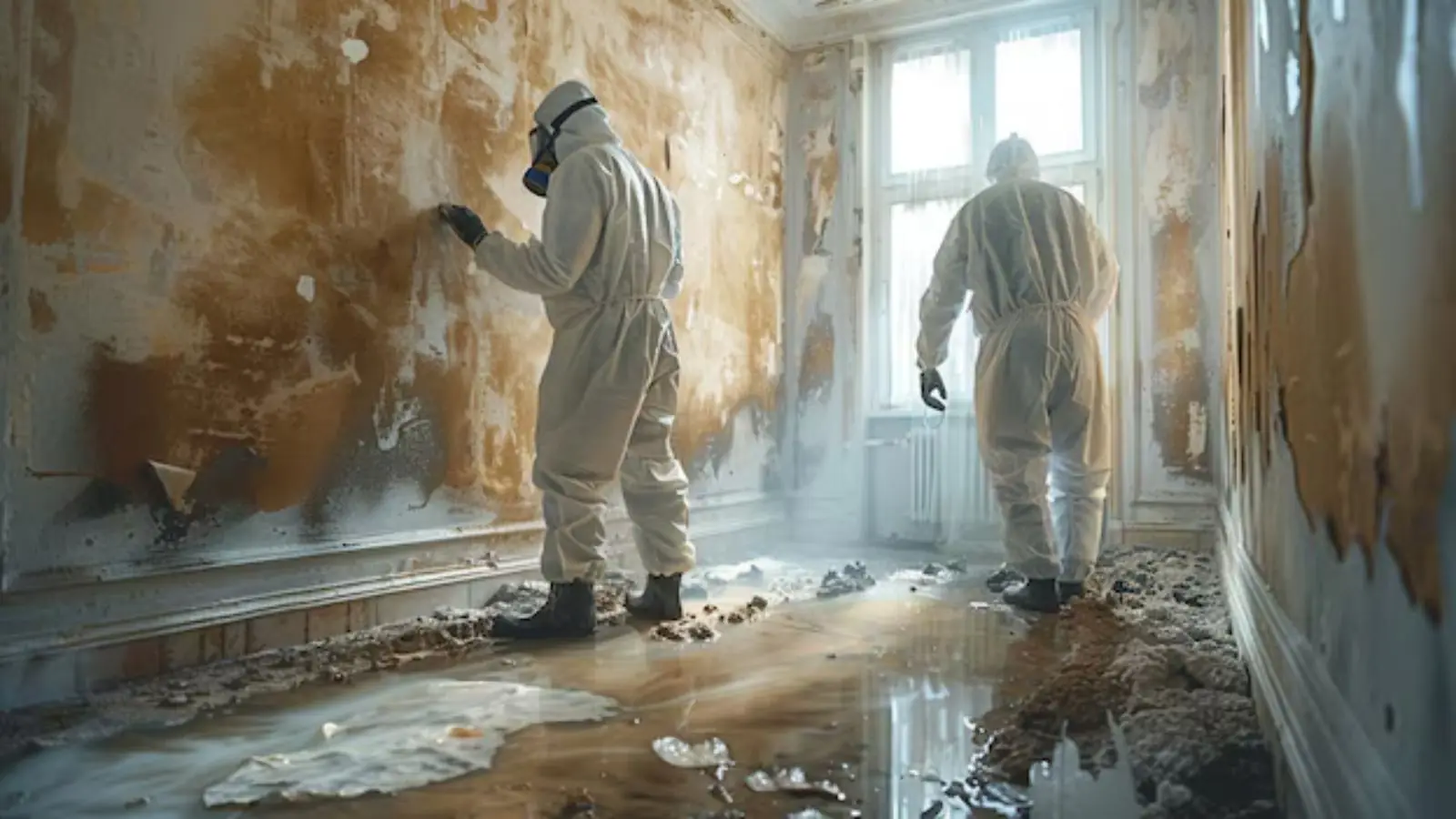
Mold remediation in Addison, TX is the controlled removal and cleaning of mold growth, paired with fixing the moisture that fed it. Crews contain the area, filter the air, take out materials that cannot be cleaned, and clean the surfaces that can.
Most mold calls start with a leak from a toilet, sink, AC condensate line, roof or siding. Our 24/7 line takes those calls, and a dispatcher can explain the next step in plain terms.
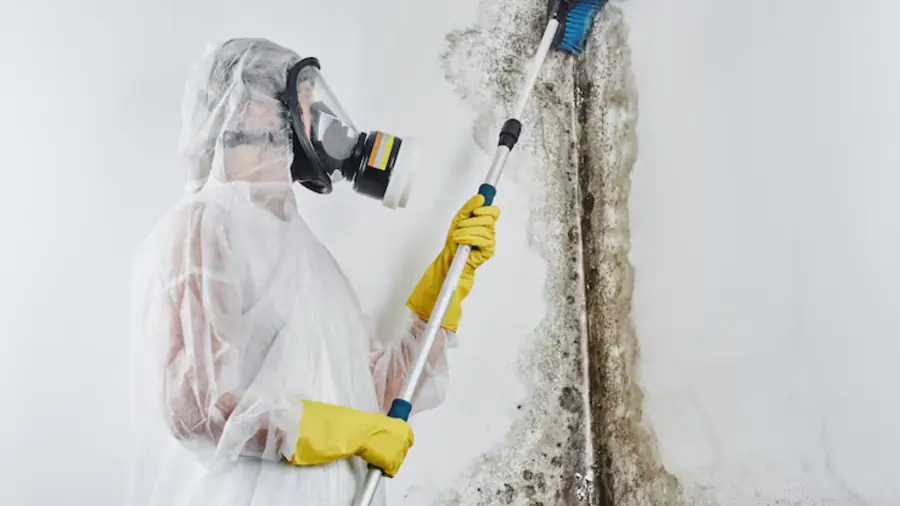
I see dark spots on my bathroom ceiling. Is it mold?
Dark or fuzzy spots on a bathroom ceiling, a closet wall or a baseboard often are mold, but looks alone cannot confirm it. Dirt, soot and old water stains can look the same. A musty smell, paint that bubbles, or a stain that returns after cleaning are common signs that moisture is still there.
The useful question is where the water is coming from. When a person asks how to get rid of the spots, the trade answer is mold remediation under ANSI/IICRC S520, the published standard for it. It means finding and fixing the moisture, containing the area, and removing the growth by method, not by wiping it with a spray.
Mold removal and black mold cleanup
Black color does not identify a species. Mold comes in many colors, and only lab work can name a species. We make no health claims about any type, and questions about symptoms belong to your physician. What we can do is remove the growth safely.
The work starts with containment. Crews hang plastic sheeting, tape seams, and run negative air with HEPA air filtration so spores are pulled out of the room instead of drifting to the rest of the house. Workers wear respirators and disposable suits, and the room is kept under negative pressure until the work is done.
Porous materials with growth, such as drywall, insulation, ceiling tile and carpet, are cut out and bagged, because mold grows into them. Non-porous surfaces like metal, glass, tile and sealed wood are cleaned with HEPA vacuuming and damp wiping. Afterward the area is dried and checked with a moisture meter before containment comes down.
Mold after water damage
Mold needs moisture, and a wet house provides plenty. The Texas Department of Insurance says mold can start growing within a day after a leak. A supply line, a failed washer valve or a backed-up condensate line can leave drywall damp for days before anyone sees it.
Fix the leak first. Cleaning mold off a wall that is still getting wet only buys a few weeks. Next, dry the structure quickly. That is the job of water mitigation, which uses air movers, LGR dehumidifiers, moisture meters and thermal imaging to find and dry hidden water.
If mold is already visible, drying alone is not enough, because the growth is still on the material. Crews dry first, then remove what is affected, so the repair does not close in a damp wall. Keep wet items you can move, pull up wet carpet, and photograph the damage before cleanup. Ask the crew to show you the readings.
Mold after a leak? Do not wait. Call the 24/7 line and describe what you see.
☎ (972) 945-2885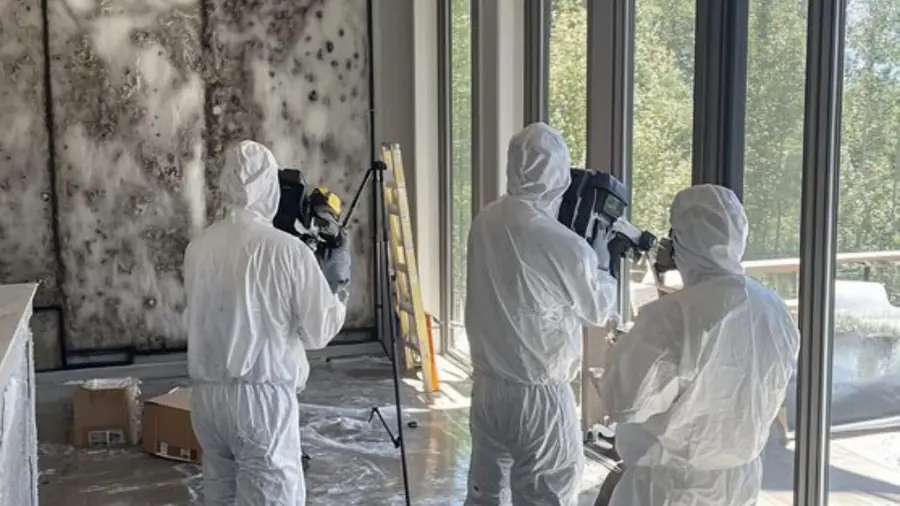
Common leak sources, where mold appears and the first step
Mold follows water. These are the places it usually shows up first.
| Leak source | Where mold appears | First step |
|---|---|---|
| Closet wall behind a leaking toilet or sink | Lower drywall, baseboard, cabinet backs | Close the supply valve and photograph the wall |
| AC condensate line | Ceiling below the air handler, closet walls, attic floor | Turn off the system, clear or replace the line |
| Roof leak | Ceiling stains, attic decking, insulation | Tarp or patch, then dry the insulation |
| Siding or window leak | Inside the wall cavity near the opening | Seal the entry, then open the wall to check |
| Bathroom ceiling | Ceiling surface, around fans and vents | Check the fan duct and any leak above it |
Wet drywall that stays damp past a day or two should be inspected, not painted over.
Mold testing and inspection
Assessment and remediation are separate jobs in Texas. The Texas Department of Licensing and Regulation (TDLR) licenses mold assessors and mold remediators. Collecting air or visible spore samples counts as assessment, so sampling is not something a remediator does on the same project.
Remediation of 25 contiguous square feet or more of visible mold generally needs a licensed remediator. Smaller areas, under 25 contiguous square feet, may be cleaned by unlicensed people. One licensed company or person generally cannot do both the assessment and the remediation on the same project.
Licensed assessors and remediators must hand you a Consumer Mold Information Sheet before work. Only a licensed remediator can issue a Certificate of Mold Damage Remediation. Use the TDLR Verify a License search to confirm any company you hire.
Clearance testing
After remediation, an independent assessor can check that the work met the plan. This is called clearance testing, and it is what many lenders, buyers and insurers ask to see. Ask the assessor what the report will include before you hire one.
What a mold job looks like from call to certificate
The order matters, and it is why some jobs take longer than expected.
- Find the moisture. A technician uses a moisture meter and thermal camera to trace the water, and records readings and photos.
- Set the scope. The written scope lists the area, materials to remove and containment needed, and price is explained before work begins.
- Contain and filter. Plastic barriers go up and HEPA air filtration runs for the whole job.
- Remove and clean. Porous materials come out. Surfaces that can be cleaned are cleaned.
- Dry and verify. Moisture readings must be normal before anything is rebuilt, and a licensed remediator issues the certificate.
How scope and price are explained before work starts
A technician inspects the home, documents the problem with moisture readings and photos, and writes the scope. Price is explained before any work begins. The cause of the moisture is part of that scope, because a repair that ignores the leak will not last. We serve Plano and nearby cities from the same dispatch.
Cost factors for mold remediation
Mold jobs range from a small closet wall to several rooms. These factors set the cost.
| Factor | Why it matters |
|---|---|
| Area of visible growth | Past 25 contiguous square feet, a licensed remediator is generally needed |
| Containment and air filtration | Bigger containment means more sheeting, equipment and time |
| Materials removed | Drywall, insulation and flooring each add tear-out and disposal |
| Testing and clearance | Assessor fees are separate and go to a different company |
| Rebuild scope | Replacing drywall, paint and trim is separate work, often from another trade |
Check your policy before you start. Most Texas home policies do not include mold cleanup and testing unless the coverage was added.
Mold that develops on a covered damaged item would be covered, and TDI says to expect an inspection showing the mold was removed and the cause fixed, plus a certificate of removal. Call the 24/7 line for a real number. For rebuild work after removal, see water damage repair.
Honest limits
Here is what we do not do.
- We do not make health claims. Ask a physician about symptoms.
- We do not promise mold will not return. If moisture comes back, mold can too.
- We do not do waterproofing or roof repair. Those are different trades.
- We do not offer equipment rentals.
Frequently asked questions
You cannot tell by looking. Dirt, soot and water stains look similar. If the spot is damp, smells musty or returns after cleaning, treat it as possible mold and have it looked at.
Fix the source of the moisture first. A technician can read the moisture and tell you if the ceiling needs to be opened.
In Texas, areas under 25 contiguous square feet of visible mold may be cleaned by unlicensed people. At 25 contiguous square feet or more, a licensed remediator is generally needed.
Even for a small area, find and fix the moisture first. You can check any company with the TDLR Verify a License search.
Ask the lender or buyer what documentation it wants. It may be a Certificate of Mold Damage Remediation, clearance testing paperwork, or both.
A licensed remediator issues the certificate after the work. Because assessment and remediation are separate, a different licensed company usually handles testing. We cannot promise what a lender will accept.
Most home policies do not include mold cleanup and testing unless you added that coverage. Mold that develops on a covered damaged item would be covered. Ask your agent.
Generally not on the same project in Texas. One licensed company or person generally cannot do both the assessment and the remediation, which keeps the testing independent.
TDI says it can start growing within a day. Stop the source, remove standing water, dry the area and move wet items out.
Still have questions about this? Dispatch answers around the clock, and the dispatcher can explain next steps.
☎ (972) 945-2885