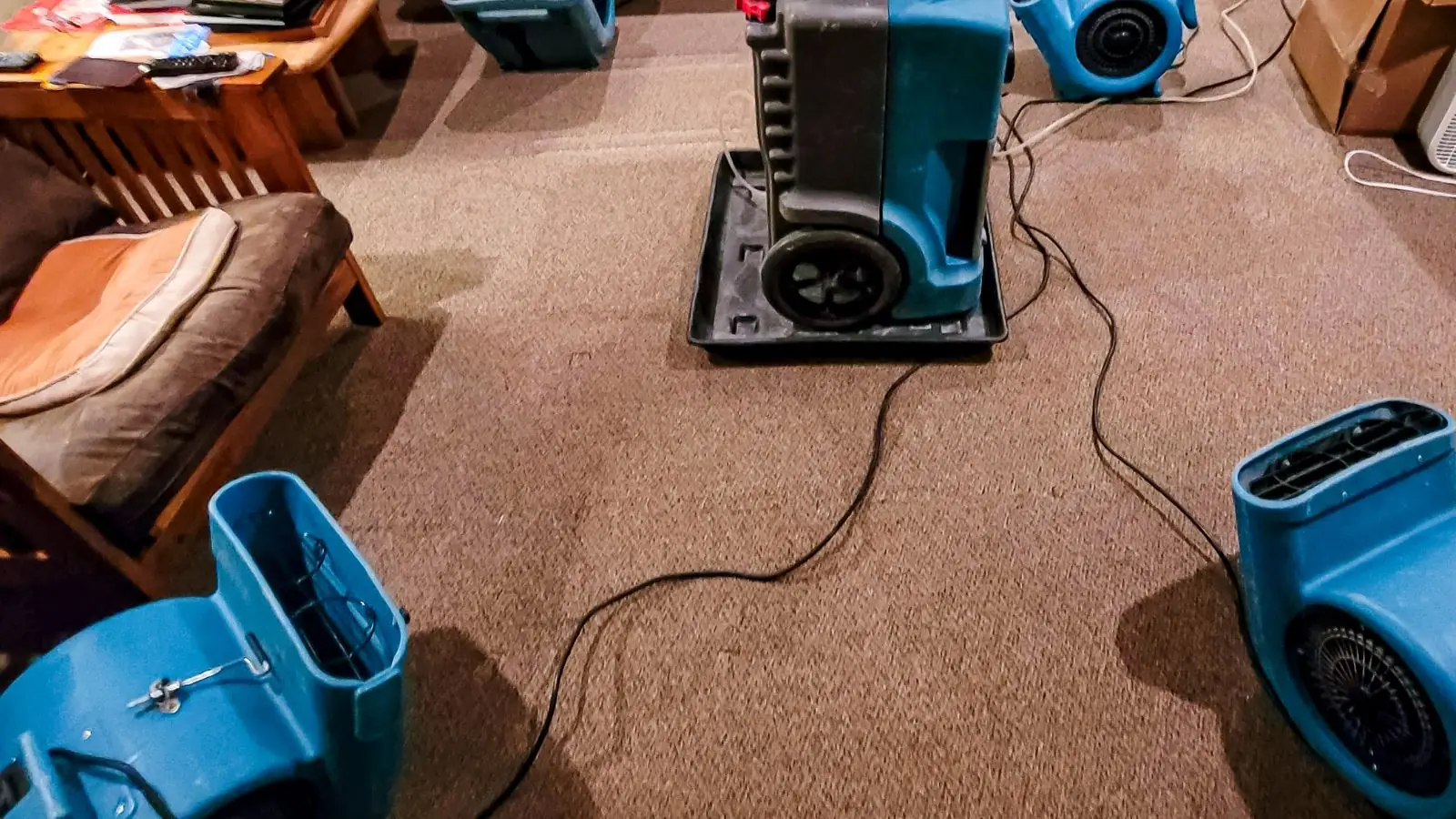
Emergency water mitigation in Addison, TX means stopping water damage in the first 24 to 72 hours, before swollen drywall, warped floors and mold take hold. Our 24/7 line is open now.
While you wait: shut off the main water valve, turn off power to wet areas only if you can reach the panel dry, lift valuables and furniture off wet floors, and keep kids and pets out of any water that may be contaminated.
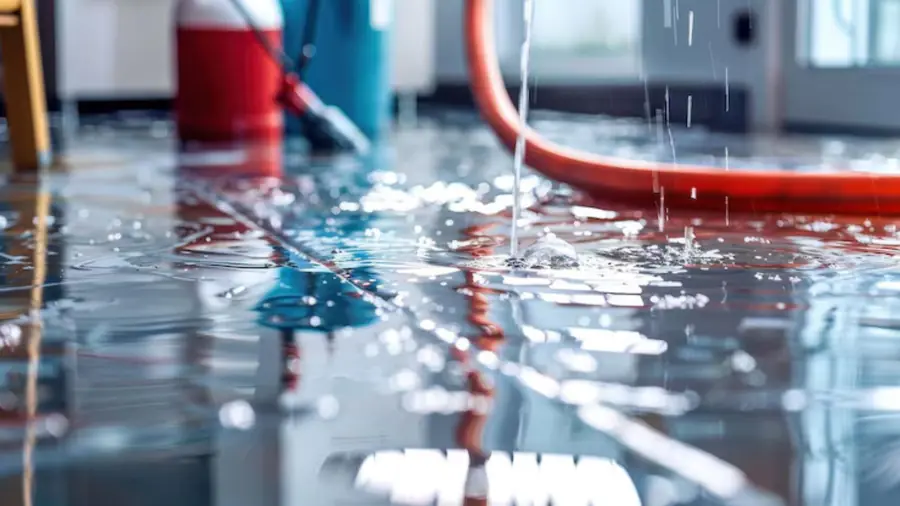
Why is my carpet or wall still wet after I mopped and ran a fan?
Because the surface is only the part you can see. Water wicks into carpet pad, behind baseboards, up drywall and down into the subfloor, and a household fan moves air across the top of all that. The material feels dry in a day while the cavity behind it stays damp.
That hidden moisture is what water mitigation deals with. Mitigation is the set of steps that stop the damage from spreading: finding and shutting off the source, extracting standing water, mapping where moisture went, and setting up controlled drying. Texas Department of Insurance guidance notes mold can start growing within a day after a leak, so the first days count.
What happens first on an emergency call
Every job follows the same order, though the details change with the home.
- Shut-off and safety check. The crew confirms the water is off at a fixture valve or the main, looks for electrical and slip hazards, and decides which areas are safe to enter.
- Extraction. Truck-mounted or portable extraction units pull standing water, and a weighted wand pulls water out of carpet and pad.
- Moisture mapping. A moisture meter and a thermal camera trace water through walls, floors and ceilings. The readings and photos become your drying record.
- Drying setup. Air movers, dehumidifiers and sometimes injection or cavity drying are placed based on the map, and wet material that cannot dry is removed.
Structural drying
Structural drying is the longest part of the job. Air movers push dry air across wet surfaces and into wall cavities, and low grain refrigerant (LGR) dehumidifiers pull the moisture out of that air and drain it away. In very damp or cold conditions a crew may add desiccant dehumidification. Wall cavities are dried by drilling small vent holes or lifting baseboards, and floor systems can be dried through the subfloor with mats or ports.
Each material has a drying goal, which is the moisture reading it reaches when it is dry for that building. A technician sets those goals on day one using a dry reference reading from an unaffected part of the home, then checks the equipment and the readings every day. Equipment gets moved, added or pulled as the readings change.
Drying times depend on the water category, the materials, humidity, and how far water spread. Many Category 1 jobs finish in about 3 to 5 days, while thick wood floors, plaster, and sewage cleanup can run a week or longer. Equipment stays until readings meet the drying goals, then it is removed. A home that feels dry may not be, which is why the meter decides, not the calendar.
Water still spreading? Do not wait. Call the 24/7 line and describe what you see.
☎ (972) 945-2885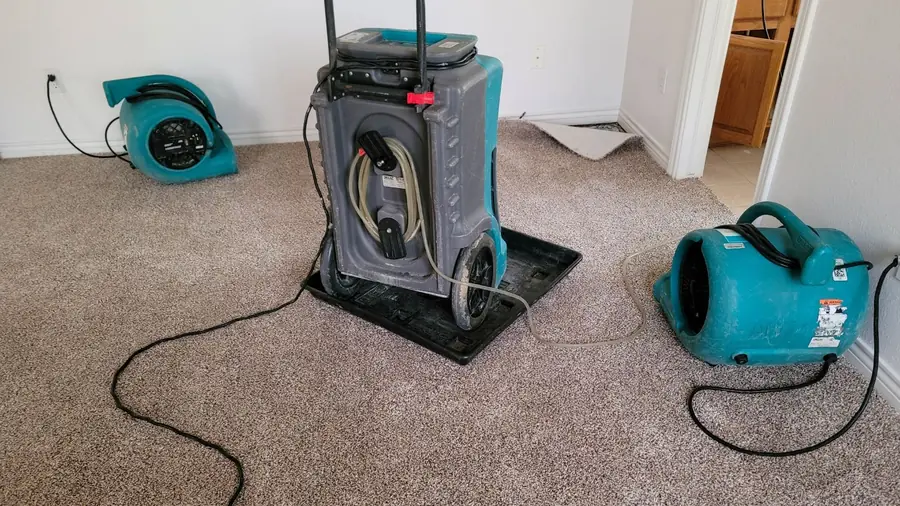
Water category, what it means, and what is done
Industry practice under ANSI/IICRC S500 sorts water by contamination. Ask any company whether its crews work to that standard.
| Water category | What it means | What is done |
|---|---|---|
| Category 1 | Clean source, like a supply line, faucet or melted ice. It can degrade within a day or two. | Extract, dry in place, and save most carpet, pad and drywall. |
| Category 2 | Contaminated, like washer or dishwasher discharge or a sump failure. May cause illness if swallowed. | Extract, remove and replace pad and porous finishes, clean and dry the rest. |
| Category 3 | Grossly contaminated, like sewage or rising floodwater. | Remove porous materials, clean and sanitize surfaces, dry the structure. Keep people out. |
Clean water that sits for days can move into a higher category.
Safety: when to stay out and call 911 first
Water and electricity do not mix. Stay out of the room if you see any of these, and call 911 or the utility before you call us.
- Water touching an electrical panel, outlet or a running appliance.
- Sagging ceiling with water pooling above light fixtures.
- Sewage in the water, or a strong gas smell.
- Cut power only if the panel is dry and you can reach it without stepping in water.
If the Town of Addison water meter is leaking, Town utilities say an operator will be dispatched immediately and there is no charge for water turn-off services. Only an authorized agent may turn water on or off at the meter, and the plumber who repairs the pipe should turn it back on.
What affects the cost of water mitigation
A real number needs a look at the damage. These factors set the range.
| Factor | Effect on the job |
|---|---|
| Water category (1, 2 or 3) | Higher categories mean removal of more materials and extra cleaning. |
| Affected area | More rooms and more wet wall height mean more extraction and more equipment. |
| Materials involved | Hardwood, plaster and insulation take longer to dry than carpet. |
| Drying days and equipment | More air movers and dehumidifiers over more days add up. |
| Rebuild scope | Whatever is removed has to be replaced later under water damage repair. |
Before work starts, a technician inspects, records moisture readings and photos, writes the scope, and explains the price. Insurance note: sudden and accidental damage, like a burst pipe, is often covered, while gradual leaks are not, and floods usually need separate flood coverage. Check your policy and call the 24/7 line for a real number.
Freezing weather and thawing pipes
Frozen pipes often split without leaking until they thaw. NWS Fort Worth recorded two stretches at or below freezing of 93 hours and 139 hours during the February 2021 winter event, which is why many homes found water only after the ice melted. If a pipe has frozen, know where your main shut-off is before it thaws.
Town of Addison advice is to turn sprinklers off when a freeze is forecast, and the Town can shut off water on an emergency basis for a leak or burst pipe. For broader flooding, see emergency water removal. Once standing water is out, water damage cleanup handles debris and contents. We also serve Richardson and nearby cities.
Frequently asked questions
A fan dries the surface only. The pad and subfloor under carpet stay wet because airflow cannot reach them, and humid air slows everything down. A crew uses extraction, moisture mapping and dehumidifiers so the whole assembly dries, not just the top.
Air movers blow air across wet surfaces so water evaporates faster. LGR dehumidifiers then capture that moisture from the air so it does not settle back into walls and ceilings. Both are needed. One without the other is slow.
It depends on the water category, the materials and the humidity. Many jobs run about 3 to 5 days, and dense or heavily wet materials can take a week or more. Daily moisture readings decide when drying is done.
No, drying equipment is placed and monitored by the crew. We do not offer equipment rentals for DIY, because placement and daily readings decide whether the structure actually dries. Equipment is removed once readings meet the drying goals.
Yes. Dispatch runs 24/7, including nights, weekends and holidays, and we offer same-day response when available. While you wait, shut off the main water valve and keep people away from any electrical hazards.
Still have questions about this? Dispatch answers around the clock, and the dispatcher can explain next steps.
☎ (972) 945-2885