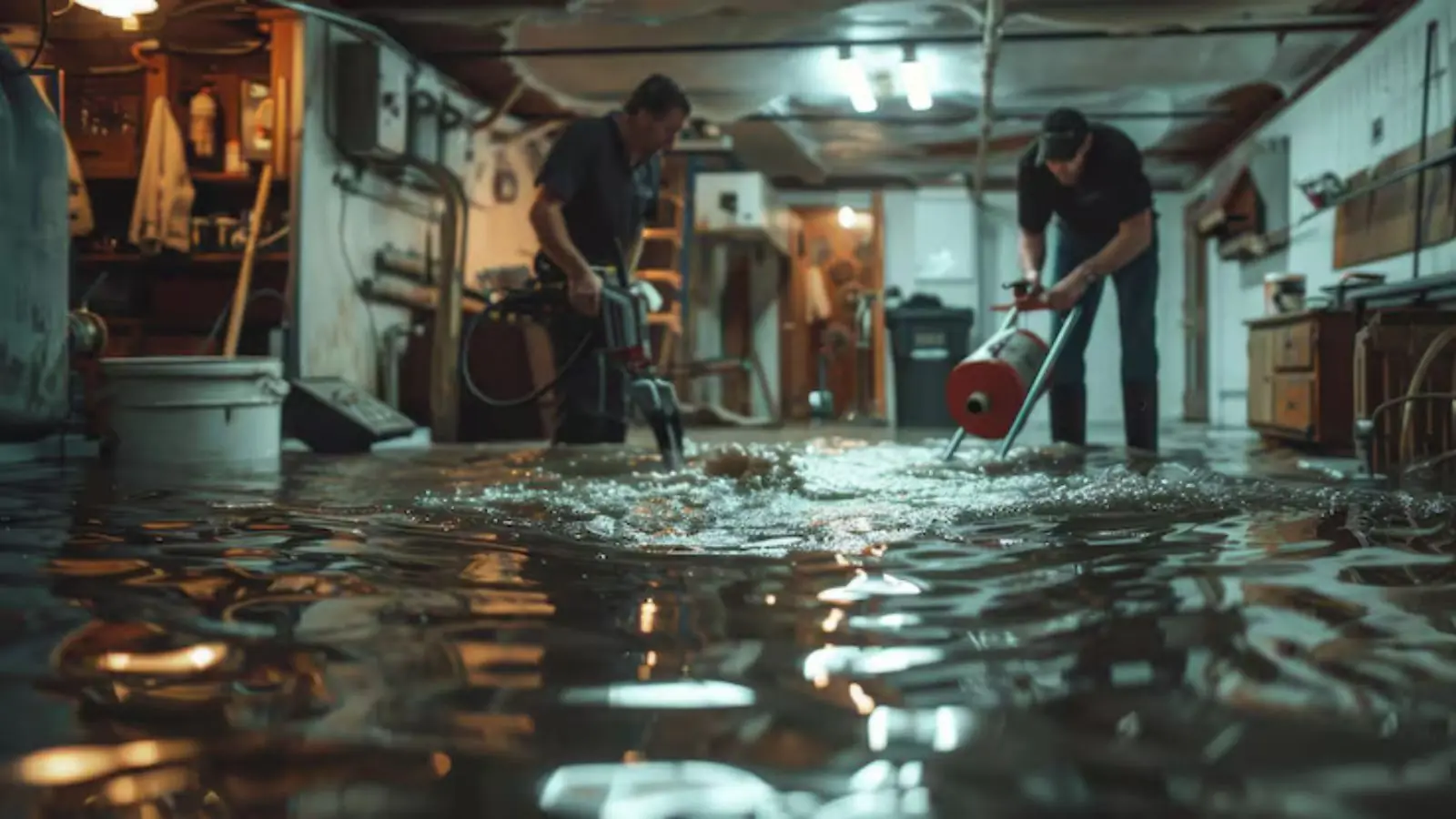
Emergency water removal in Addison, TX means pumping and extracting standing water from a home as fast as the situation allows. Our 24/7 line is open now, and a dispatcher sends licensed and insured crews, with same-day response when available.
While you wait, stop the source, shut off the main water valve, lift valuables off the floor, and keep people and pets out of any water that may be contaminated. Turn off power to wet areas only if you can reach the panel while standing on dry ground.
When standing water is an emergency
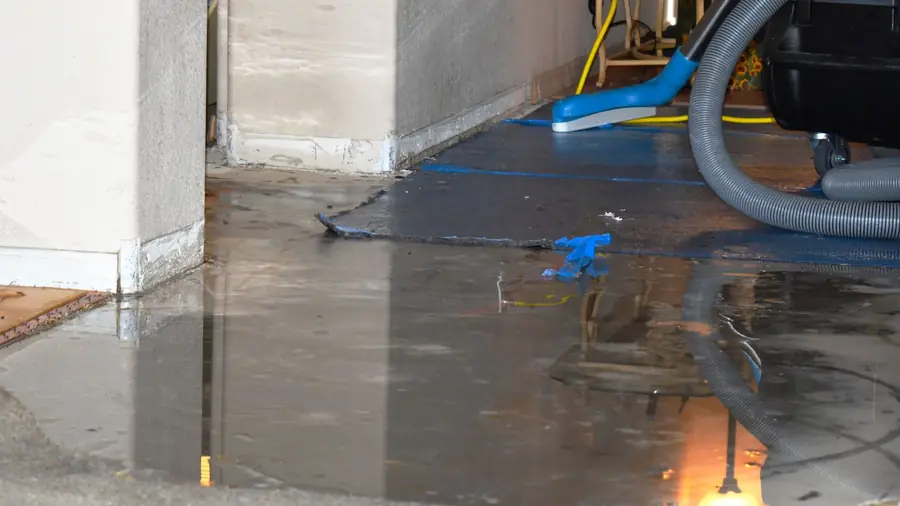
Any water that is still moving, still rising or sitting on carpet is an emergency. Water wicks up drywall and baseboards, soaks into the pad under carpet, and finds its way into the subfloor. Every hour of delay raises the amount of material that has to be torn out later.
What to do while you wait for the crew
These steps are safe for most homeowners and they limit the damage before extraction starts.
- Stop the source if you can reach it, or close the main shutoff.
- Move rugs, electronics, books and small furniture to a dry room.
- Put foil or plastic under the legs of furniture that has to stay on wet carpet.
- Open cabinet doors under sinks so trapped water can escape.
How we pump and extract the water
The equipment depends on depth. Deeper water, such as several inches in a finished room, goes out first with submersible pumps and hoses run to a drain or the yard. Once the water is shallow, truck-mounted or portable extraction units pull the rest off hard floors and out of carpet.
On carpet we use weighted extractors, wand tools a technician presses down to squeeze water from the pad and backing. Wet vacs handle corners, stairs and tight closets. Drying equipment still has to finish the job, so ask about water mitigation once the pumps shut off.
Water on the floor now? Do not wait. Call the 24/7 line and describe what you see.
☎ (972) 945-2885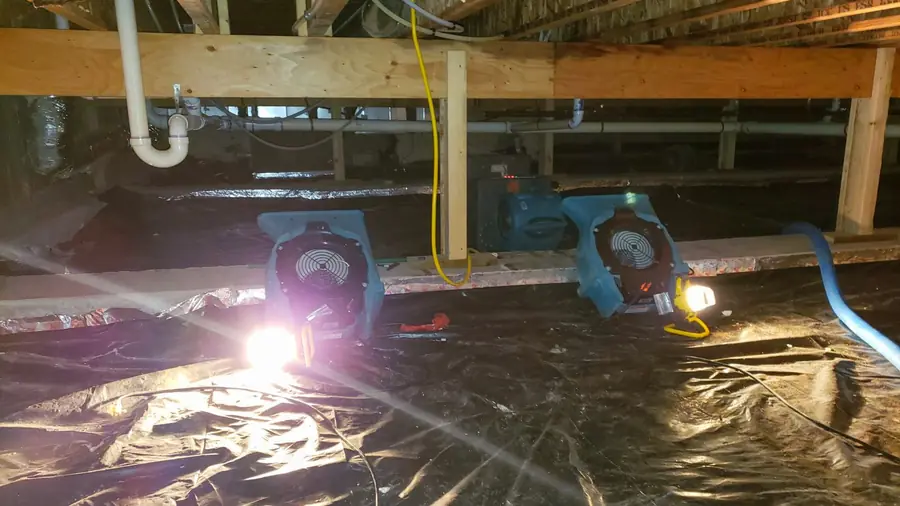
Burst pipe water damage
Shut the main first. The Town of Addison says no one but an authorized agent may turn your water on or off at the water meter, so use the shutoff inside your home. It is typically in a garage, laundry room or closet, and a yard valve may sit under a green plastic cover in a flower bed.
A broken supply line can put out several gallons a minute, enough to cover a kitchen floor in minutes. Photograph the break, the water line on walls and every damaged item before cleanup starts.
A pipe under a sink or inside a wall needs more than extraction. Water runs down into the wall cavity and cabinet base where you cannot see it. Afterward a technician maps moisture with a meter and thermal camera, so wet drywall and insulation are found before mold starts. The professional who repairs the pipe should turn the water back on.
Source of water, category and first move
The water category tells the crew how much protection and removal the job needs. This is how common sources usually sort out.
| Source of water | Typical category | First move |
|---|---|---|
| Supply line or pipe under a sink | Category 1 (clean) at first | Close the shutoff, open the cabinet, photograph, call |
| Washing machine hose | Category 1, may turn Category 2 | Shut the machine's valves, unplug it, lift laundry and boxes |
| Water heater leak | Category 1, check for rust or sediment | Shut off the cold supply and the power or gas to the heater |
| AC condensate line | Category 2 (gray), often with algae | Turn off the air handler, then call |
| Toilet overflow | Category 2, Category 3 if it holds waste | Close the toilet valve, stay out of the water |
| Roof leak | Category 1 to 2, depends on the insulation it passed through | Place buckets, move belongings, tarp only if it is safe |
| Storm or rising ground water | Category 3 (black) | Stay out, do not touch outlets, call for dispatch |
A clean source can slip a category if the water sits for a day or more.
Water in a crawl space or the whole house
Standing water under a house is harder to judge. A crawl space may hold water from a plumbing leak, an irrigation line, or groundwater pushed in by a heavy storm. We pump it out, but the source still has to be found and fixed, or the water returns.
If the whole house is flooded, treat the water as contaminated until a technician says otherwise. Backflow from a drain or sewer line is a common cause. Do not walk through it, and read flood damage restoration for how those jobs are handled.
Town of Addison emergency water facts
The Town runs its own emergency line for the water system, which helps you decide who to call first.
Safety before anyone steps into the water
Water and electricity do not mix, and sewage is a separate risk.
- If water touches an electrical panel, outlets or a plugged-in appliance, stay out of the room.
- Cut power only if the panel is dry and you can reach it without stepping in water.
- If you smell gas or see sparking, leave and call 911 or the utility before you call us.
- If sewage is involved, keep children and pets out and do not touch the water.
- Do not use a household vacuum on standing water.
How scope and price are explained before work starts
A technician inspects the home, documents the wet areas with moisture readings and photos, and writes the scope. Price is explained before any work begins, so you decide with the facts in front of you. You can ask the crew to show you the readings.
Cost factors for water removal
No two jobs cost the same. These factors decide the number.
| Factor | Why it matters |
|---|---|
| Water category 1, 2 or 3 | Contaminated water needs protective gear, disposal and more material removal |
| Affected area and depth | More rooms and deeper water mean more pumps, hose and labor |
| Materials involved | Carpet pad, hardwood and drywall react differently and cost differently |
| Drying days and equipment | Extraction is only the first day, drying can run several more |
| Rebuild scope | Removed drywall or flooring has to be replaced by a separate trade |
Sudden and accidental water damage is often covered by home policies, and gradual leaks often are not. Check your policy.
For a real number on your house, call the 24/7 line. Crews also serve Carrollton next door.
Frequently asked questions
Yes. The line is staffed around the clock, including nights, weekends and holidays. A dispatcher takes your details and sends a crew, with same-day response when available, and tells you what to do while you wait.
As soon as possible. TDI says mold can start growing within a day after a leak, so the first day matters most. Carpet pad and drywall also absorb more water the longer it sits.
No, we do not offer equipment rentals. Our crews place and monitor drying equipment as part of the job.
Home policies often cover sudden and accidental water damage, such as a burst pipe or a toilet overflow. Gradual leaks are often excluded, and floods are usually excluded without a separate flood policy. Check your policy and ask your insurer.
Still have questions about this? Dispatch answers around the clock, and the dispatcher can explain next steps.
☎ (972) 945-2885