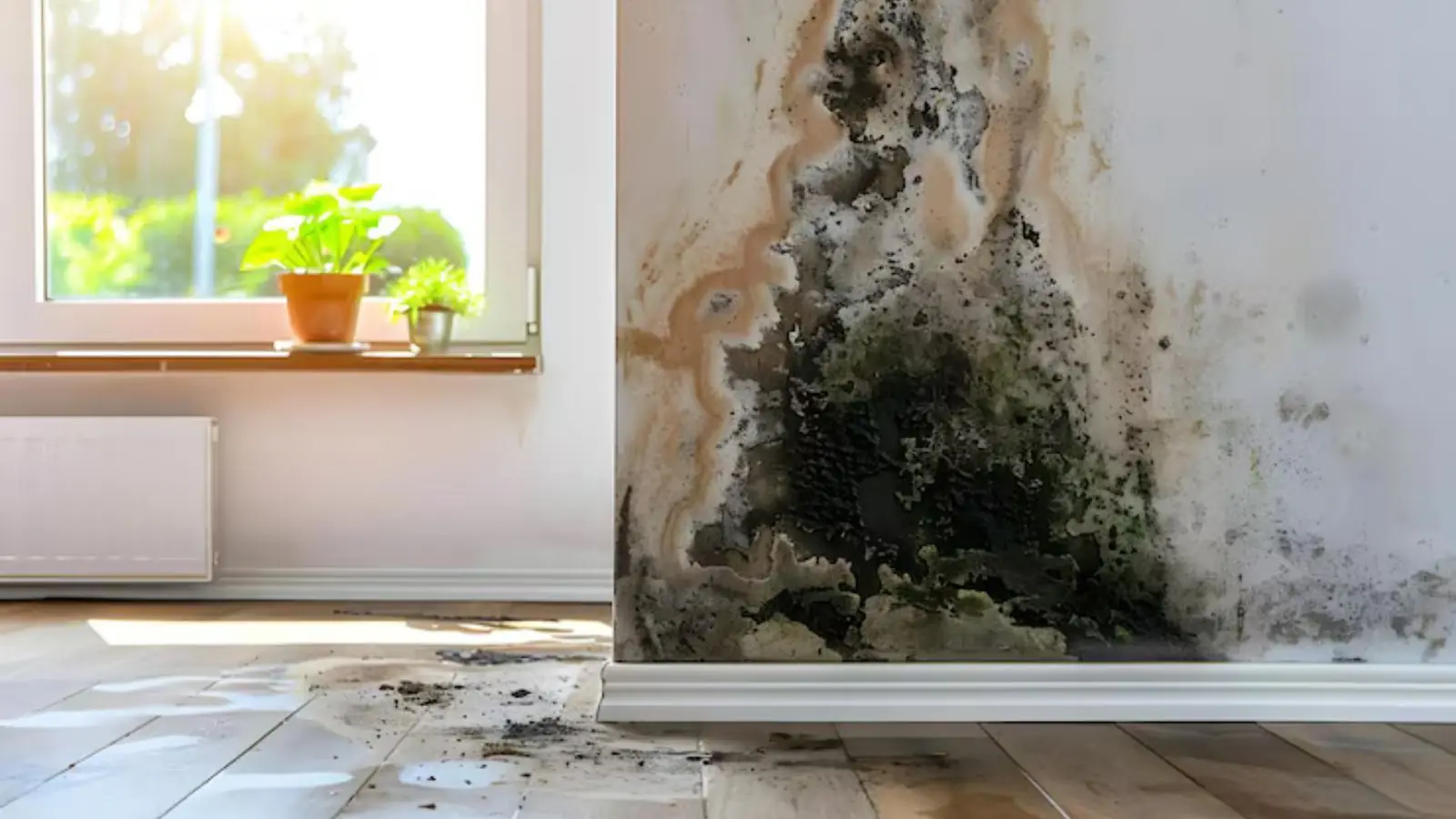
Mold from water damage in Addison, TX starts when building materials stay damp long enough for spores that are already in every home to settle in and grow. The Texas Department of Insurance says mold can start growing within a day after a leak, so the clock begins when the water arrives, not when you see a spot.
This guide covers how mold follows moisture, the hidden places it shows up, what to do right now, and how professional work is structured. It makes no health claims, since those questions belong to a physician.
How mold follows moisture
Mold needs three things: moisture, something to feed on and time. Drywall paper, wood framing, carpet pad, cardboard and dust all work as food. You cannot remove the food from a house, so the one thing you control is moisture.
That is why the first job after a leak is drying, not cleaning. A wall that looks fine can hold enough water inside to support growth, and surface wiping does nothing for the damp material behind it. Fast, measured drying through water mitigation is the main way to cut the odds of growth, although no one can promise the outcome in every house.
Four places it hides after a leak
Visible spots are the late sign. These are the early locations, where moisture lingers out of sight.
Behind baseboards
Water wicks into the bottom of the drywall and the trim traps it against the wall. A leak from a washer valve or dishwasher line often ends up here.
Under carpet and pad
The foam pad stays wet long after the carpet top dries. If a rug or carpet was wet for more than a day, the underside deserves a look.
Inside wall cavities
Insulation and framing hold water behind intact drywall. A burst supply line or a roof leak traveling down a stud can wet a cavity without staining the wall.
Around AC condensate lines
A clogged drain line or full drain pan drips quietly onto insulation, ceiling drywall and the closet or attic floor, so growth can build for weeks.
Signs that moisture is still in the structure
None of these is a diagnosis. Each one is a reason to check with a meter or have a licensed professional look.
- A musty smell that stays after the area has been cleaned and aired out.
- Paint that bubbles, peels or leaves a chalky film on a wall that got wet.
- Dark spots or fuzzy patches on drywall, trim, grout lines or the underside of a cabinet.
- Baseboards that pull away from the wall or flooring that cups after a leak.
- A wall that feels cool or damp days after the water was cleaned up.
Wet material, possible mold? Do not wait. Call the 24/7 line and describe what you see.
☎ (972) 945-2885What to do now
TDI lists a handful of steps that line up with how crews work. Follow them in order.
- Stop the source. Turn the water off at the fixture or the main, and shut down the AC if a condensate line is leaking.
- Remove standing water. Use a mop, towels or a wet vacuum on small amounts. Larger volumes need an extraction crew.
- Move wet items out. Take wet furniture, boxes and rugs to a dry area. TDI also says to pull up wet carpets and rugs.
- Dry the area promptly. Run the AC and fans in the room if the water was clean, and open closet doors and cabinets so air can reach the walls.
- Leave suspect growth alone. Avoid sweeping, sanding or blowing air at visible growth, which can scatter it through the house.
- Photograph before you change anything. Take pictures and video of damage and any visible growth, and keep damaged items until your adjuster has seen them.
How professional mold work is structured
Testing and remediation follow industry practice, and ANSI/IICRC S520 (mold remediation, Fourth Edition 2024) is the published standard. In plain terms: someone finds the moisture source and the extent of growth, the work area is sealed off with plastic and negative air, affected material is removed or cleaned, the area is dried and cleaned again, and the cause is corrected.
Ask any company whether its crews work to S520. Our mold remediation service dispatches to licensed and insured professionals and keeps assessment and removal as separate steps. We can also remove wet materials in Carrollton and Coppell, but removal of drywall and pad is not mold clearance.
What mold costs to deal with and how insurance sees it
Cost depends on the size of the affected area, the materials involved, how much has to be removed and rebuilt, whether the moisture source is fixed, and whether post-work verification is needed. A technician inspects, documents moisture readings and photos, writes the scope and explains the price before work begins.
TDI says most home policies do not include mold cleanup and testing after a damaged item is removed, and some insurers let you add that coverage, so ask your agent. Mold that develops on a covered damaged item would be covered. Check your policy and ask your insurer before work starts.
What this means in Addison
Texas licenses mold assessors and remediators through TDLR. Taking air or visible spore samples counts as assessment, and remediation of 25 contiguous square feet or more of visible mold generally needs a licensed remediator. Smaller areas may be cleaned by unlicensed people, so measure the visible patch before you decide who to call.
One licensed company generally cannot do both the assessment and the remediation on the same project, and only a licensed remediator can issue a Certificate of Mold Damage Remediation. Licensed companies must hand you a Consumer Mold Information Sheet before work. TDLR offers a Verify a License search, so use it before you sign.
Source type: Texas Department of Licensing and Regulation FAQ and Texas Occupations Code Chapter 1958
Frequently asked questions
TDI says mold can start growing within a day after a leak. How much grows depends on the material, the temperature and how long it stays wet. Drying quickly is the best lever you have.
Under Texas rules, areas smaller than 25 contiguous square feet may be cleaned by unlicensed people. That does not fix the moisture behind it. If the spot returns after cleaning, something in the wall is still wet.
For health questions about exposure, talk with a physician.
A test reports what was in a sample from one place at one time. It does not tell you the cause or where the moisture is. Moisture readings and a look inside the affected area usually say more about next steps than a lab number.
Start with a licensed assessor to define the scope, then a separate licensed remediator to do the work. The remediator can issue the Certificate of Mold Damage Remediation that buyers and lenders usually ask for.
It could be, or it could be stale water in the drain pan or wet insulation. Check whether the condensate line is dripping or blocked, and look for stains on the nearby ceiling or floor. A musty smell is a reason to inspect, not a diagnosis.
Texas licensing runs through TDLR, not the Town. Use the TDLR Verify a License search to confirm the company or individual holds a mold remediation or assessment license, and ask for the Consumer Mold Information Sheet before work starts.
Still have questions about this? Dispatch answers around the clock, and the dispatcher can explain next steps.
☎ (972) 945-2885