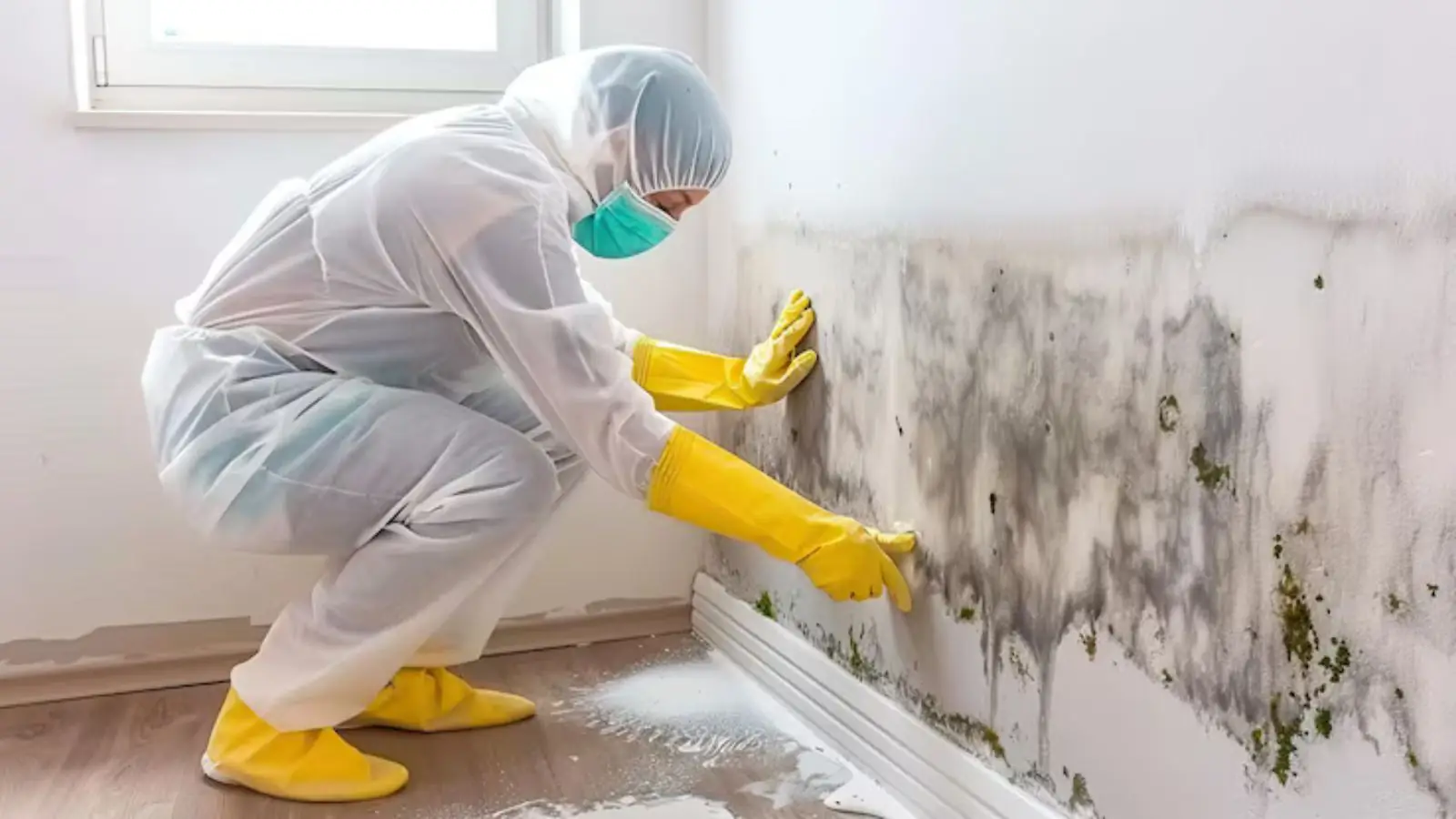
Mold mildew removal in Addison, TX comes down to one question per surface: can it be cleaned, or does it have to come out? Hard, sealed surfaces usually clean. Porous materials that hold growth usually get replaced.
Homeowners often use mildew for a flat, powdery surface growth and mold for something deeper or fuzzier. Both need moisture. This post covers surfaces, humidity, and when a cleanup becomes a remediation job.
Mold versus mildew in plain terms
People commonly call light gray or white powdery growth on shower tile or a window sill mildew, and thicker, darker or fuzzy growth mold. It is a homeowner distinction, not a lab one, and you cannot reliably tell them apart by looking. Both need moisture and something to grow on.
This post makes no health claims. Questions about symptoms belong with a physician. The practical rule is the same for both: remove the moisture, clean what can be cleaned, and take out what cannot.
Surface, clean or replace, and why
Use this as a starting point. A hands-on inspection settles borderline cases.
| Surface | Clean or replace | Why |
|---|---|---|
| Glazed tile and glass | Clean | Non-porous, so growth sits on top |
| Grout | Clean, then seal | Porous but scrubbable, and stained grout may need regrouting |
| Painted drywall (light surface spots) | Clean if firm and dry | Paint can protect the paper face, if it is not saturated |
| Wet or soft drywall | Replace | Paper and gypsum hold water and growth |
| Sealed wood trim and framing | Clean and dry, sometimes sand | Wood can be HEPA vacuumed and wiped if solid |
| Unfinished or rotted wood | Replace if soft | Fibers hold moisture and break down |
| Fabric, upholstery, curtains | Launder or discard | Fibers trap growth, and heavy staining rarely comes out |
| Carpet and padding | Replace padding, clean or replace carpet | Padding holds water, and wet carpet over 24 to 48 hours is risky |
| Insulation and ceiling tile | Replace | Porous material cannot be cleaned reliably |
| HVAC vents and registers | Clean covers, inspect ducts | Metal covers wipe clean, but internal duct growth needs a pro |
These are general practice notes aligned with ANSI/IICRC S520 principles, not a diagnosis of any specific home.
A basic cleanup for hard surfaces
For small areas on tile, glass, sealed fixtures or painted wood trim.
- Fix the moisture first. A leak, damp cabinet or weak fan will bring growth back within weeks.
- Set up the room. Open a window, run a fan to the outside, and wear gloves, safety glasses and an N95.
- Use one cleaner. Dish soap and water, white vinegar or a labeled mold cleaner. Never mix chemicals, especially bleach with ammonia or acids.
- Scrub and rinse. Use a brush or cloth, then wipe with clean water.
- Dry completely. A dehumidifier or fan for several hours finishes the job. Damp leftovers restart the cycle.
Not sure if it cleans or comes out? Do not wait. Call the 24/7 line and describe what you see.
☎ (972) 945-2885Humidity control basics
Indoor relative humidity above roughly 60 percent for long periods favors growth, and many guides suggest staying between 30 and 50 percent. A cheap hygrometer from a hardware store tells you where your house sits.
In summer, an AC system pulls moisture from the air, but an oversized unit can short cycle and leave a room clammy. A clogged condensate line or a pan overflow can wet a ceiling or closet. Running bath and kitchen fans, fixing dryer vents and keeping furniture a few inches off exterior walls all help.
Signs a cleanup is turning into a remediation job
Look for these.
- Growth covers 25 contiguous square feet or more, the Texas line where a licensed remediator is generally needed.
- The materials are soft, stained through, crumbling or swollen.
- Growth returns within a few weeks after cleaning.
- A musty smell persists with no visible source, which can mean a wet cavity.
- A recent leak soaked drywall, carpet or insulation.
- The growth is inside the HVAC system or ducts.
At that point, mold remediation crews set containment, filter the air with HEPA equipment, remove porous material and clean the rest. If the cause was a leak or flood, water damage cleanup covers the wet material and drying.
Lender and home-sale situations
Buyers, appraisers and lenders sometimes ask for mold to be addressed before a closing. Ask your lender or agent exactly what documentation is needed, because requirements vary by loan type and contract.
In Texas, a licensed remediator issues a Certificate of Mold Damage Remediation after qualifying work, and licensed assessors and remediators must provide a Consumer Mold Information Sheet before starting. One licensed company or person generally cannot do both assessment and remediation on the same project, so a lender asking for testing and removal will typically need two companies.
What this means in Addison
NWS Fort Worth lists 37.01 inches of annual precipitation at DFW Airport (1991 to 2020 normals) and notes that flooding occurs nearly every year across the metroplex. That airport station is not Addison, but it says wet seasons are normal here. Check gutters, grading near the foundation and window seals before spring storms so water does not become the next indoor moisture source.
The average freeze-free period runs from March to November, and the airport averages 29 freezes per season. Freeze bursts can soak walls quietly, so a musty smell after a cold snap is worth a moisture check.
Source type: NWS Fort Worth climate normals
Insurance and nearby homes
Most home policies cover sudden and accidental water damage but do not include mold cleanup and testing after a damaged item is removed, and TDI notes you may be able to add that coverage. Ask your agent. Take photos, save receipts and keep damaged items until the adjuster has seen them.
A technician inspects, documents with moisture readings and photos, writes the scope, and explains price before work begins. Service reaches Richardson and Coppell as well.
What drives the cost
Call the 24/7 line for a real number once the area is inspected.
Frequently asked questions
Homeowners use mildew for light, flat surface growth and mold for deeper growth, but you cannot reliably tell by looking. Both need moisture and the same practical steps apply.
Light surface spots on firm, dry, painted drywall can often be cleaned. Soft, swollen or saturated drywall usually has to be removed.
Many guides suggest 30 to 50 percent indoors. A hygrometer tells you where you are.
It is not a fix on porous materials, and it must never be mixed with ammonia or acids. Soap and water or a labeled cleaner is a safer choice for hard surfaces.
Ask your lender exactly what documentation is needed. In Texas, a licensed remediator issues a Certificate of Mold Damage Remediation, and assessment and remediation generally go to separate companies.
NWS data for DFW Airport shows 37.01 inches of yearly precipitation and frequent spring storms. That makes gutters, drainage and AC condensate lines worth checking, since mold needs moisture.
Still have questions about this? Dispatch answers around the clock, and the dispatcher can explain next steps.
☎ (972) 945-2885