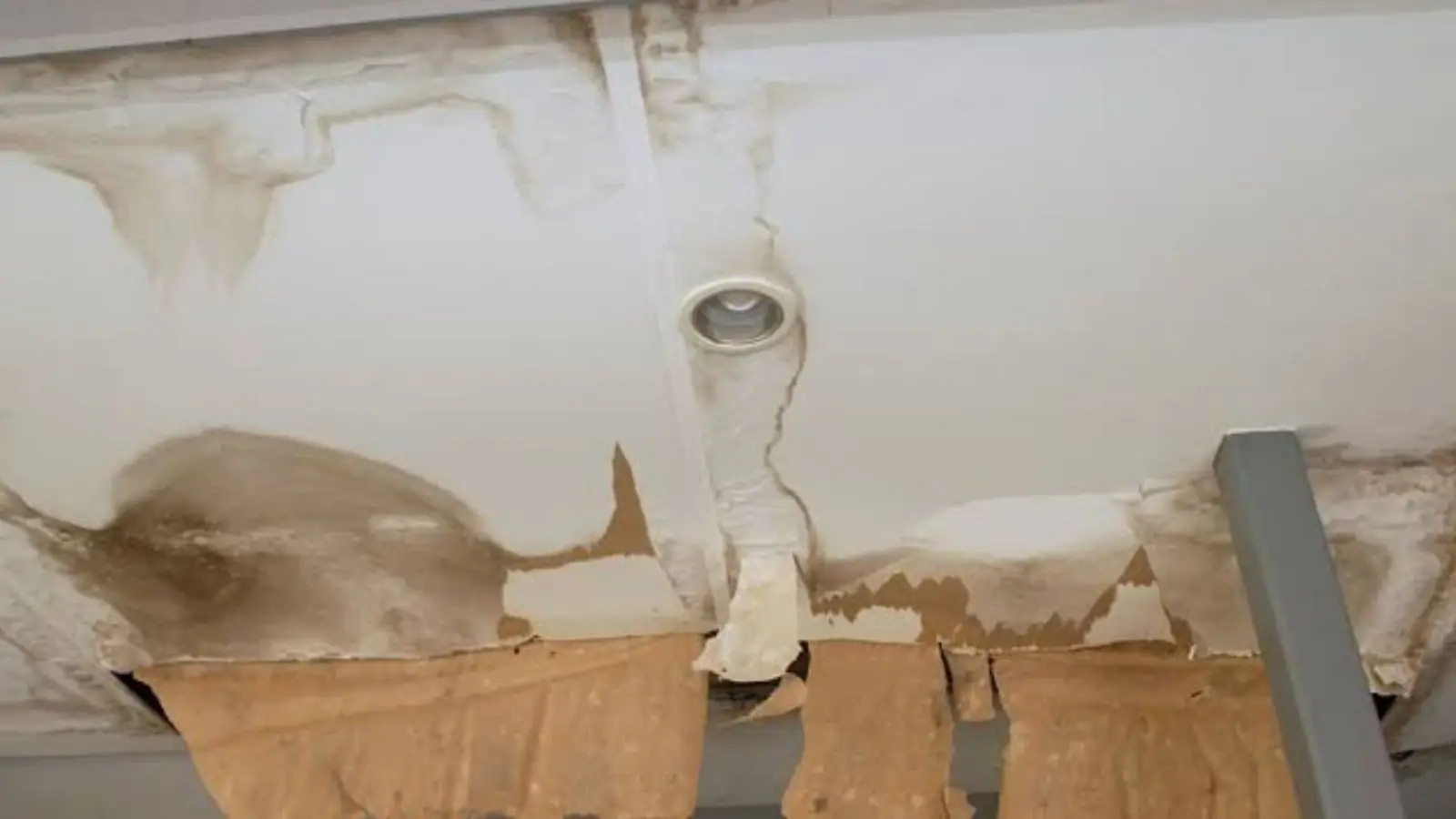
To repair a water damaged ceiling in Addison, TX, you replace the wet or stained drywall, tape and mud the seams, prime with a stain-blocking primer, match the texture, and repaint. None of that should happen until the leak is fixed and the ceiling is verified dry.
Patching over damp board traps moisture, and the stain or a musty smell comes back. This guide gives the repair in order, the safety checks, and the point where a patch becomes a job for a pro.
Why the order matters more than the patch
Drywall holds water like a sponge, and its paper face feeds mold if it stays wet. The Texas Department of Insurance says mold can start growing within a day after a leak, so a ceiling that looks fine may still be wet above the board. Skip the dryness check and the repair is cosmetic at best.
The repair, in order
Work through these steps one at a time. Do not move on until the step before it is finished.
- Confirm the source is stopped. A roof leak needs a roof repair, a plumbing leak needs a repaired or replaced pipe, and an AC condensate line needs to drain again. Run the fixture or wait through the next rain before you trust it. A ceiling that dries and then stains again has a source you have not found.
- Verify the ceiling is dry. Use a pin or pinless moisture meter and compare the reading to a dry ceiling in another room. If you do not own a meter, cut a small test opening about 4 inches square between joists and feel the back of the board and the insulation. Wet, cool or soft means keep waiting.
- Protect the room and yourself. Cover the floor with plastic sheeting. Wear an N95 or better mask, safety glasses and gloves. Shut off the breaker for any light fixture or fan in the work area, and confirm it is dead with a non-contact tester.
- Cut out the wet board and insulation. Mark a clean rectangle that extends 6 to 12 inches past the stain or soft spot, ideally to the center of the nearest joists. Score with a utility knife, pull the board down in pieces, and bag wet insulation. Leave the area open to air for a day if the framing looks damp.
- Install new drywall. Cut a piece of matching thickness (usually 1/2 inch for ceilings) and screw it to the joists or to wood backing strips with drywall screws set just below the surface.
- Tape and mud the seams. Press paper or mesh tape into a thin coat of joint compound, then add two or three thin coats, letting each dry fully and sanding lightly between coats. Wider feathering hides the edge better than a thick bead.
- Prime with a stain-blocking primer. Use a shellac-based or oil-based stain blocker over the patch and over any old brown ring you plan to keep. Ordinary wall paint lets tannin and water stains bleed through.
- Match the texture. Popcorn, knockdown and orange peel each need a different method. Spray-can texture works for small areas, and a test on cardboard first saves a redo.
- Paint the whole ceiling plane. Two coats of ceiling flat paint, edge to edge, hide the patch better than a spot touch-up. Cut in along the walls first, then roll.
Safety before you cut or sand
A ceiling can hide more than water. Keep these rules in mind before any tool touches it.
- Electrical: water that reached a light fixture, ceiling fan, smoke detector or junction box makes that circuit unsafe. Turn off the breaker, do not stand in water on the floor, and have an electrician check anything that got wet.
- Older homes: if the house is old, ceiling texture and joint compound from decades ago may contain asbestos. This is general advice, not a claim about any property. Ask a qualified testing lab or a licensed professional before you sand or scrape, and do not dry-sand if you are unsure.
- Dust: drywall dust is fine and travels. Seal doorways with plastic and close HVAC registers in the room.
Ceiling still damp or sagging? Do not wait. Call the 24/7 line and describe what you see.
☎ (972) 945-2885Patch it yourself or stop and call
Use this as a quick filter before you buy materials.
| What you see | Likely situation | Next move |
|---|---|---|
| Small dry stain, no sag, source repaired | Cosmetic damage only | DIY steps above after the dryness check |
| Stain larger than a few feet across | Wet insulation and board over a wide area | Get a professional moisture map before closing anything |
| Sagging, bulging or dripping drywall | Board is saturated and may fall | Stay out from under it, call a pro |
| Gray or green fuzzy growth, musty smell | Mold on board or framing | Stop, and read the mold section below |
Category 1 is clean supply water, Category 2 is gray water, and Category 3 is contaminated water, per ANSI/IICRC S500.
Signs the job has outgrown a DIY patch
Call a professional when the wet area is large, when the water was not clean, when the board is sagging, or when you see mold. A saturated ceiling can release a large section at once, and wet insulation above it adds weight. Water damage repair crews pull the wet material, dry the cavity with air movers and a dehumidifier, and document readings so you know the structure is dry before rebuild.
Visible mold of 25 contiguous square feet or more generally needs a licensed mold remediator in Texas, and the same company cannot assess and remediate the same project. If the growth is smaller than that, it may be cleaned by an unlicensed person, but the cause still has to be fixed. Water from a drain or toilet is Category 3 and belongs to a trained team, as covered under water damage cleanup.
What this means in Addison
The Town of Addison's Development Services pages say cosmetic work such as painting and wallpapering does not need a permit. A ceiling patch that is just drywall finish and paint falls near that category, so you likely do not need to file anything for the basic repair.
The list is described as not all-inclusive, and the Town does not spell out drywall replacement rules. If the repair also involves plumbing, walls, or anything structural, ask the Town's Building Inspection staff whether your repair needs a permit before you start. Contractors also have to register with the Town before beginning a project, so if you hire out, ask whether the company has done that.
Source type: Town of Addison Development Services pages
Where insurance and photos fit
Sudden and accidental water damage, such as a burst pipe, is often covered, while gradual leaks often are not. Check your policy and ask your insurer before you tear anything out. Take photos or video of the ceiling before repairs, keep damaged pieces until the adjuster has seen them, and save receipts.
Homes in Richardson and Plano follow the same documentation habits.
What drives the cost of a ceiling repair
A small DIY patch costs a few supplies. A professional job varies with these factors, and a real number comes from an on-site look.
Frequently asked questions
Only after the source is fixed and the ceiling is dry. Use a stain-blocking primer first, because regular paint lets the brown ring show through again.
There is no single number. A thin patch of wet board can dry in a few days with air movement, while saturated board with wet insulation behind it takes longer. Go by the moisture meter or test opening, not the calendar.
Usually yes if it is soaked, because wet insulation holds moisture against the drywall and loses its value. Damp but not soaked batts can sometimes be dried, but a professional can tell you after taking readings.
A shellac-based or oil-based stain-blocking primer is the usual choice. Apply it to the patch and over any old stain you are covering, then finish with ceiling paint.
Treat it as one. Keep people and pets out from under it, shut off the water source, and turn off power to that room if it is safe to reach the panel. A sagging section can drop without warning.
The Town lists cosmetic work such as painting as not needing a permit, but its list is not all-inclusive. If your repair goes beyond drywall finish and paint, ask the Town's Building Inspection staff before starting.
Still have questions about this? Dispatch answers around the clock, and the dispatcher can explain next steps.
☎ (972) 945-2885