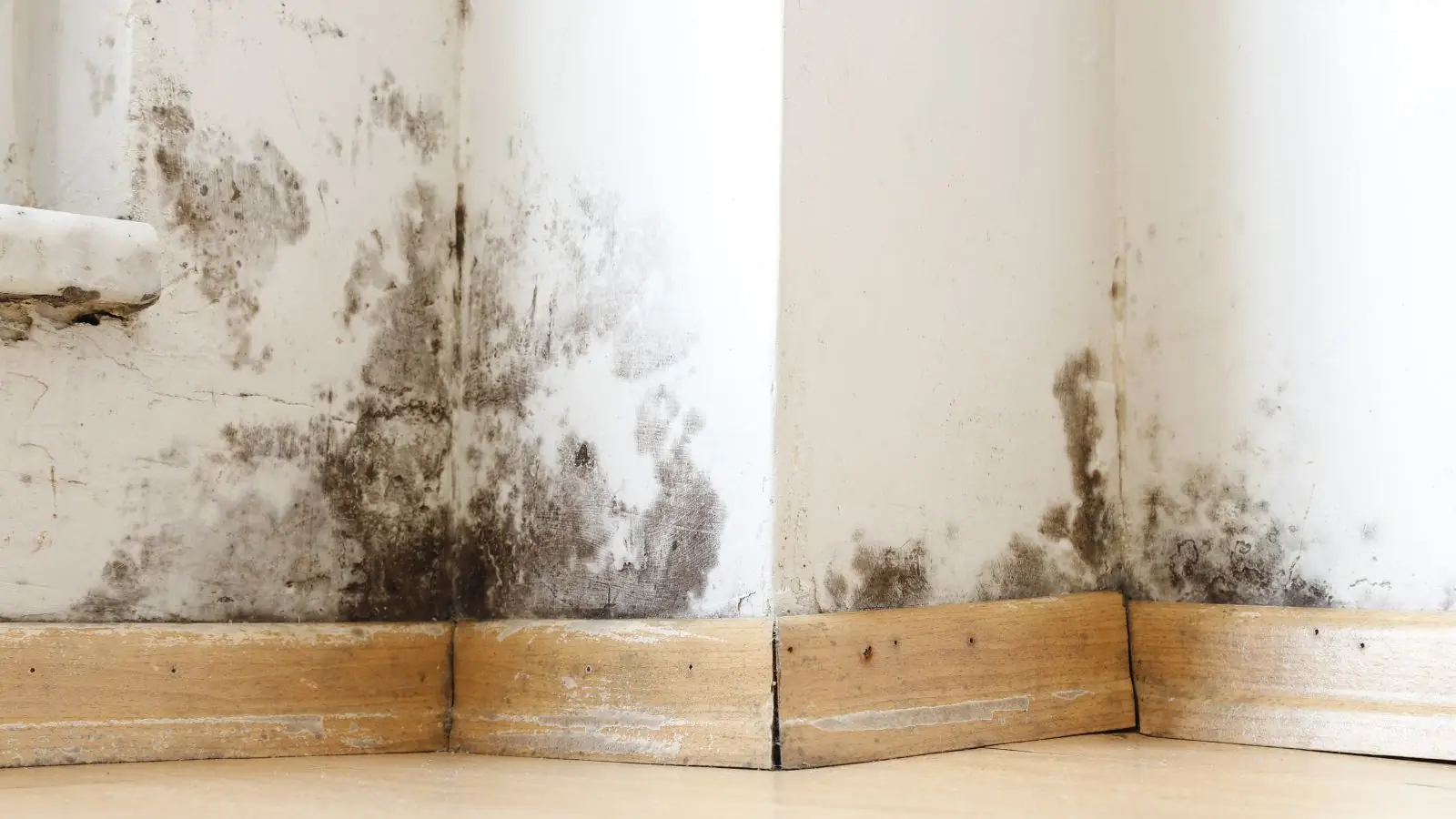
Water damage and mold in Addison, TX are linked by one thing: moisture. A stain is a mark left by water, and mold is a living growth that needs moisture, a food source and time. Sometimes you have one, sometimes both.
You cannot always tell by looking, and this page does not diagnose. It shows which visual and smell cues point where, when testing makes sense, and how Texas separates the people who assess mold from the people who remove it.
What you see, and the next step
Use this as a sorting aid, not a verdict. Only a trained inspector with the right tools can tell you what a spot is.
| What you see | Water stain or possible mold | Next step |
|---|---|---|
| Flat tan or brown ring on a ceiling, no texture | Usually a water stain from a past or present leak | Find the source, check moisture, then clean or repaint with stain-blocking primer |
| Fuzzy, speckled or spotty patches, often dark green, black or white | Possible mold | Keep the area dry, avoid disturbing it, and ask a licensed assessor if it spreads or recurs |
| Musty smell with no visible mark | Possible hidden moisture or growth | Check behind furniture, under sinks, and in closets, and use a moisture meter |
| Bubbling or peeling paint | Moisture behind the surface | Find the source before repainting, because paint will not hold |
| Dark spots near a window or vent | Condensation, dirt or possible growth | Wipe test is not a diagnosis, so fix humidity sources and monitor |
| Soft, warped or sagging drywall | Wet material, with growth possible | Treat as a drying and repair job first |
Color alone cannot identify mold. Many molds look alike, and some stains look like mold.
Why moisture is the real question
Mold needs moisture to grow. No water, no growth. That is why the best first move after a leak is not testing or scrubbing but drying. Our water mitigation process uses moisture meters and a thermal camera to find damp materials that look dry on the surface.
The Texas Department of Insurance says mold can start growing within a day after a leak. That does not mean every leak produces mold. It means drying promptly is the practical protection, and a reading that is still elevated after a week deserves attention.
Cues that help, and cues that mislead
Look, then smell, then check moisture. Do not rely on one cue.
- Texture: fuzzy or powdery growth is more suspicious than a flat, even stain.
- Pattern: a ring with a dark edge usually follows the outline of a leak.
- Smell: a musty odor can point to hidden moisture even without visible marks.
- Location: growth tends to show up near plumbing, windows, HVAC drain lines and roof penetrations.
- Recurrence: a spot that returns after cleaning means the moisture is still there.
- Misleading: dust, soot, cooking residue and mildew-like film on grout can look similar.
Health questions, such as whether symptoms are related to your home, belong with a physician.
Spot after a leak? Do not wait. Call the 24/7 line and describe what you see.
☎ (972) 945-2885When testing makes sense
Testing is not a required first step. If you can see growth and know the source, the usual path is to fix the leak, dry the area and remove affected material. Testing helps in specific situations: a persistent smell with no visible source, a real estate or lender requirement, a dispute, or a need to confirm that an area is clear after work.
In Texas, collecting air or visible spore samples counts as mold assessment. That is regulated work, so a company sampling your home should be a licensed assessor. Industry practice for assessment and remediation follows ANSI/IICRC S520 (Fourth Edition, 2024), and you can ask any company whether its crews work to it.
Assessment and remediation are separate jobs
Texas licenses mold assessors and mold remediators through the Texas Department of Licensing and Regulation (TDLR). One licensed company or person generally cannot do both the assessment and the remediation on the same project. The point is that the party who decides what needs removing is not the party being paid to remove it.
Before work begins, licensed assessors and remediators must hand clients a Consumer Mold Information Sheet. After remediation of qualifying areas, only a licensed remediator can issue a Certificate of Mold Damage Remediation. Our mold remediation page explains how the process works.
The 25 square foot line
Remediation of 25 contiguous square feet or more of visible mold generally needs a licensed remediator. Smaller areas, less than 25 contiguous square feet, may be cleaned by unlicensed people, including you. Cleaning a small patch does not fix the moisture behind it.
What to do if you find a spot
Stay calm and be methodical.
- Stop the water. Fix or isolate the leak, whether it is a supply line, an AC condensate line or a roof.
- Dry the area. Fans and a dehumidifier help on small areas. Bigger wet areas need meters and professional drying.
- Photograph it. Document size, location and any visible moisture source before cleaning.
- Do not disturb a larger patch. Scrubbing or sanding can spread particles around the home.
- Decide on assessment. If the area is large, hidden or recurring, ask a licensed assessor before hiring a remediator.
- Check licenses. Use the TDLR Verify a License search for any assessor or remediator before signing.
What affects the scope and cost
A real figure needs an on-site look. These are the drivers.
Most home policies do not include mold cleanup and testing after a damaged item is removed, though insurers may let you add that coverage, so ask your agent. Mold that develops on a covered damaged item would be covered. Check your policy.
What this means in Addison
The mold licensing rules above are state rules, so they apply to Addison homes the same as anywhere in Texas. The practical tie-back is simple: if a company offers both testing and removal on your house, ask how it meets the separation rule, and look it up on the TDLR Verify a License search before you sign.
Addison contractors also register with the Town before starting a project, and the license holder remains responsible for the work. For rebuild after remediation, ask the Town's Building Inspection staff whether drywall or other repairs need a permit. Plumbing fixes, such as replacing a leaking water line, do.
Source type: Texas Department of Licensing and Regulation FAQ and Town of Addison Development Services pages
Across the area
The same questions apply when a home in Plano or Coppell has a leak and a suspicious spot. Source, drying, license check, then scope.
Frequently asked questions
Stains are usually flat, tan or brown rings. Possible mold is often fuzzy, speckled or spotty, with a musty smell. Only a trained inspector can tell, so treat the cues as a guide.
No. Mold needs moisture and time. Texas Department of Insurance guidance says it can start within a day, so prompt drying is the best protection.
Not always. Testing helps with hidden smells, lender or sale requirements and clearance checks. If you see growth and know the source, fixing and drying come first.
In Texas, areas under 25 contiguous square feet may be cleaned by unlicensed people. Larger areas generally need a licensed remediator. The moisture source must be fixed either way.
Generally no. One licensed company or person generally cannot do both the assessment and the remediation on the same project.
Texas licenses assessors and remediators through TDLR, not the Town. Use the TDLR Verify a License search. The Town separately requires contractors to register before starting a project.
Still have questions about this? Dispatch answers around the clock, and the dispatcher can explain next steps.
☎ (972) 945-2885