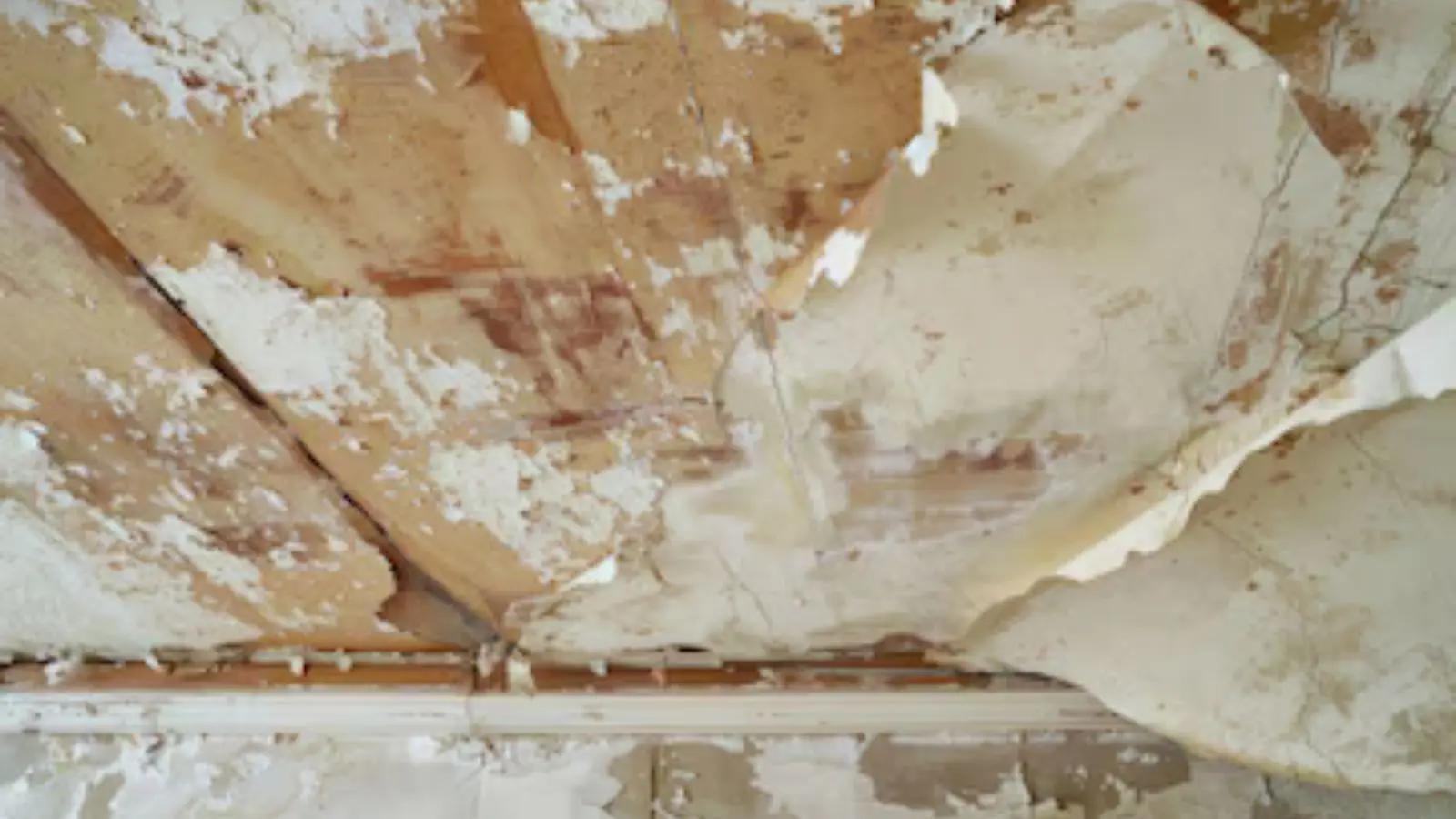
A water damage ceiling in Addison, TX is any ceiling that stains, bubbles, sags or drips because water has collected in the space above it. The water rarely starts at the stain. It travels along a joist, pipe or duct and shows up wherever the drywall is weakest.
Below you will find the four usual sources, a table for reading what you see, the first hour step by step, and the signs that a ceiling could come down. If water is actively coming through, jump to the first-hour steps.
Four places the water usually comes from
Most wet ceilings trace back to one of four sources.
A roof leak
Roof water often follows a vent pipe, chimney or flashing line, and it can stop the moment the rain does. Attic insulation soaks up the first gallons, so the ceiling stain may appear days after the shingles failed. A stain that only grows during storms points here.
An upstairs supply line
A supply line behind a second-floor sink, toilet or washer leaks under pressure, day and night. The stain keeps growing in dry weather, and the ceiling under a bathroom is the classic spot. Braided connector hoses and old angle stops are frequent failure points.
An HVAC condensate line
An air conditioner pulls water out of the air and sends it down a small drain line, often three-quarter-inch PVC. When algae clogs that line, the drain pan overflows onto the ceiling below an attic air handler. Stains show up in summer, when the system runs hardest.
A toilet, tub or sink overflow above
An overflow upstairs can dump gallons in minutes. The water pools on the subfloor and drops through light fixtures, vents and seams, which is the quickest route to a sagging ceiling. Sudden events like this are the kind many policies treat as sudden and accidental, so ask your insurer.
Reading the stain before you touch it
Match what you see to a likely cause and a safe first move.
| What you see | Likely cause | First move |
|---|---|---|
| Brown ring with a darker edge, dry to the touch | Older or repeated slow leak, such as a weeping joint or roof flashing | Trace the edge in pencil and write the date. Check again after the next rain. |
| Stain that grows only after rain | Roof leak or an opening in the attic | Photograph it, look in the attic with a flashlight if access is safe, and schedule a roof inspection. |
| Stain that grows with no rain at all | Pressurized supply line leaking upstairs | Shut off water to the fixture above, or at the main valve. |
| Stain below an attic air handler in summer | Clogged condensate line or overflowing drain pan | Turn the system off at the thermostat and keep the unit off until the line is cleared. |
| Bubbling or peeling paint that feels soft | Moisture trapped behind the paint, recent or still active | Do not poke it. Set a bucket underneath and lift furniture out of the way. |
| Bulge or sag in the middle of the ceiling | Water pooled on the drywall, with weight building | Clear the room and treat it as a collapse risk. See the puncture note below. |
A stain shows where water ended up, not where it started.
The first hour, in order
Assume water is still coming through. Do these in order.
- Look up before you walk under it. If the ceiling bulges, sags or drips from a fixture, keep people and pets out of that room.
- Stop the water above. Close the supply valve at the fixture, or shut off the main. An inside shutoff is typically in a garage, laundry room or closet. TDI also advises moving expensive items off the floor once the water is off.
- Cut power if fixtures are wet. If water is dripping from a ceiling light, fan or outlet, turn off that circuit only if the panel is dry and you can reach it without stepping in water. If not, stay out and call 911 or the utility.
- Catch and cover. Set buckets or a plastic storage tub under drips, slide furniture away, and roll up area rugs. A sheet of plastic over what you cannot move buys time.
- Drain a bulge only if it is safe. If a bulge is wide, water is pooling and you can stand to the side with a bucket below, a single screwdriver puncture at the lowest point lets it drain in a controlled stream. Skip this if wiring, a light fixture or sagging insulation is in the area.
- Document before cleanup. Take photos and video of the stain, the source and any damaged belongings. TDI says to keep damaged items until the adjuster has seen them.
Water coming through a ceiling? Do not wait. Call the 24/7 line and describe what you see.
☎ (972) 945-2885When a wet ceiling is a collapse risk
Water is heavy, about eight pounds per gallon, and drywall softens when wet. These signs mean leave the room and do not wait for the drip to stop.
- The ceiling hangs visibly lower in the middle than at the edges.
- Seams have split or a row of screw heads is pushing through the paint.
- A bulge is holding water and still growing.
- You hear cracking or creaking when the room is quiet.
- Heavy insulation, plaster or a tile finish sits above the wet area.
Close the door, keep everyone out and call a crew that can open the ceiling in a controlled way. For an active leak, an emergency water removal team can pull standing water and relieve the pressure before the drywall lets go.
What repair looks like once the source is fixed
A plumber, roofer or HVAC tech fixes the source. A restoration crew handles the wet building materials. Wet drywall and insulation usually come out, because they hold water and stay damp long after the surface feels dry. Moisture meters tell the crew when the framing is dry, and air movers and a dehumidifier do the work in between.
TDI says mold can start growing within a day after a leak, so a ceiling left damp for a weekend is a bigger job than one opened the same day. After drying, the crew replaces drywall, then tapes, textures and paints. Our water damage repair work is built around that sequence, and crews dispatch across Addison, Carrollton and Richardson.
Cost depends on the size of the wet area, the water category, how much insulation is involved, the days of drying equipment and how hard the texture is to match. A technician inspects, documents moisture readings and photos, writes the scope and explains the price before work begins. Call the 24/7 line for a real number.
What this means in Addison
NWS Fort Worth says large hail, damaging winds and flooding occur nearly every year in the Dallas/Fort Worth area, and severe weather peaks in spring. If a ceiling stain appears after a spring storm, check the roof and attic first, and photograph both before anyone patches anything.
The Town of Addison requires a permit for plumbing work, including replacing water or sewer lines, but not for replacing fixtures or cosmetic work like painting. If the fix goes beyond a fixture swap, ask the Town's Building Inspection staff whether your repair needs a permit.
Source type: NWS Fort Worth climate notes and Town of Addison Development Services pages
Frequently asked questions
Not until you know the water is gone. Paint seals moisture in and hides the clues, and a stain that returns through new paint tells you the source is still active.
Stain blocking primer is a cosmetic step for the end of the job, after the cavity has been checked with a moisture meter.
There is no safe timer. It depends on how much water is trapped, the thickness of the drywall and what sits above it. A bulge or sag means the weight is already building, so treat it as urgent.
TDI says most homeowner and renter policies cover sudden and accidental water damage, such as a burst pipe or toilet overflow. Policies usually do not cover damage from gradual leaks.
Check your policy and ask your insurer how your situation is treated. Photograph everything before repairs.
The Town's Development Services pages list plumbing work, including replacing water or sewer lines, as needing a permit, while replacing fixtures and faucets does not. The list is not all-inclusive.
Ask the Town's Building Inspection staff before work starts. Contractors must register with the Town before beginning a project.
Still have questions about this? Dispatch answers around the clock, and the dispatcher can explain next steps.
☎ (972) 945-2885