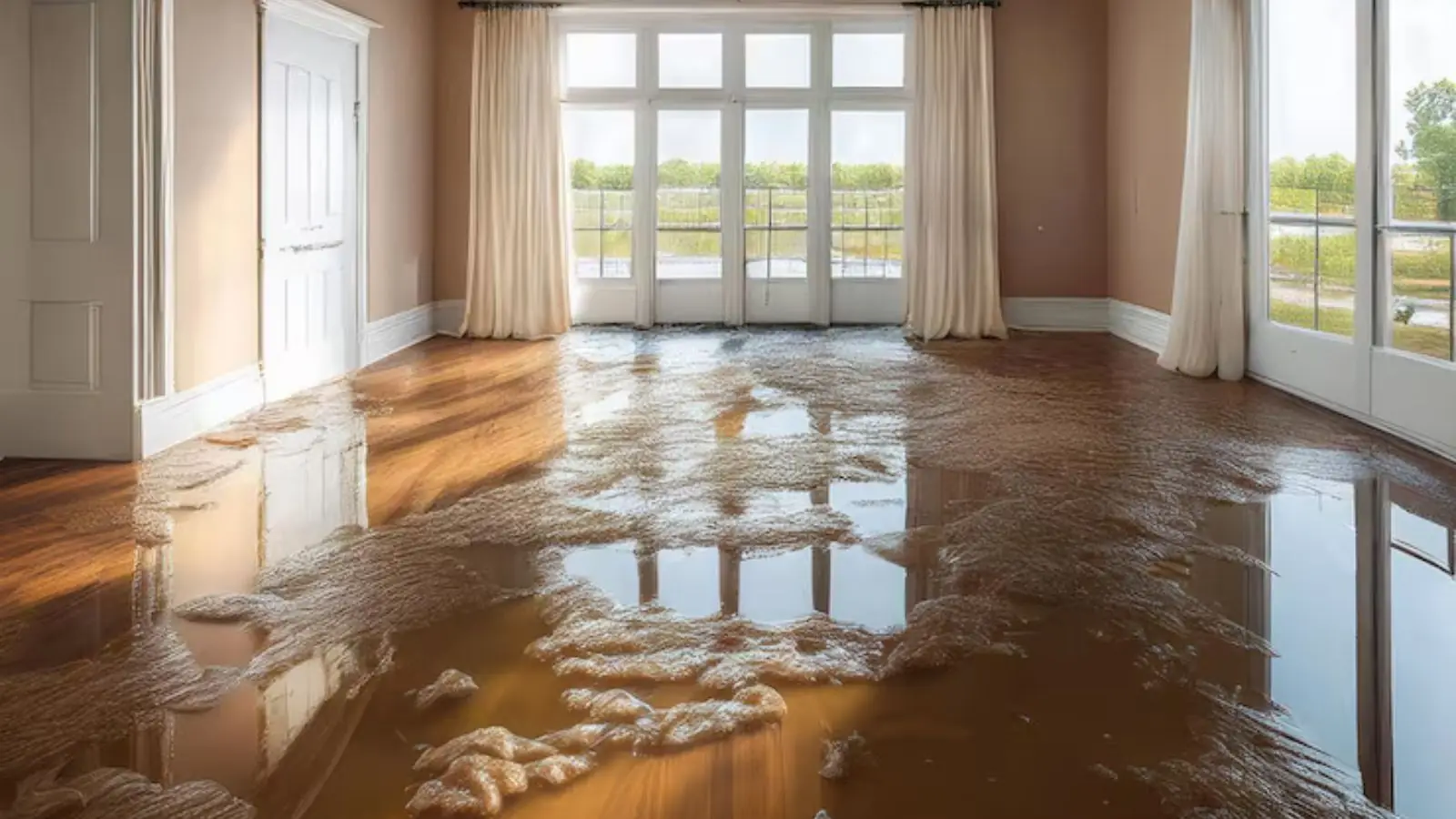
Water damage on a hardwood floor in Addison, TX shows up as cupped, crowned or buckled boards, dark stains, or gaps and soft spots. Wood swells when it absorbs moisture, and the shape of the swelling points to the source.
Some floors can be dried and saved, some need partial replacement, and some are a total loss. Speed matters, because boards that stay wet for days are harder to recover. This guide covers the three distortions, their usual causes, drying, and when to replace.
Reading the floor: sign, meaning and usual path
Look at the boards from a low angle with a light across the surface. The profile tells you a lot before any meter comes out.
| Sign | What it usually means | Typical path |
|---|---|---|
| Cupping: board edges higher than the center | More moisture on the underside than the top, often from a slow leak or damp slab | Fix the source, dry the floor, wait, then sand if the boards flatten |
| Crowning: center higher than the edges | Moisture from above, or a cupped floor that was sanded before it dried | Dry fully, then sand and refinish once readings are stable |
| Buckling: boards lifting off the subfloor | Heavy, prolonged saturation, often from a large leak or flood | Emergency drying, then expect partial or full replacement |
| Dark gray or black staining | Water sitting on the surface or in the grain for a long time | Sanding may remove light stains, deep stains usually mean replacing boards |
| Gaps after drying | Boards that swelled, then shrank as they dried | Often acceptable, repair only if gaps are wide or trip hazards |
These are patterns, not diagnoses. A moisture meter and an inspection of the subfloor confirm them.
What usually causes each pattern
Wood floors answer the question of where the water came from if you know what to look for.
Washer supply valve or hose
A weeping valve behind the machine soaks the floor nearby. It often starts as slow cupping at the laundry room edge and spreads along the boards.
HVAC condensate line
A clogged line drips onto the floor or runs under the closet. This is a gradual leak, so cupping may appear weeks before anyone sees water.
Dishwasher or refrigerator line
The kitchen floor beside the dishwasher swells first. Damage may hide under cabinet toe kicks.
Slab moisture
Moisture moving up through a concrete slab cups boards across the whole room instead of in one spot. This is a building moisture problem, not a one-time leak.
Can the boards be saved?
Sometimes. It depends on how long the wood stayed wet, whether the water was clean, how the floor is installed, and how quickly drying began. No one can promise an outcome from a photograph.
Floors dried within a few days after a short, clean-water event have a fair chance of flattening. Cupping often relaxes over a period of weeks as boards equalize, and rushing a sand can lock in the distortion. Floors that sat wet for a week or more, were nailed over a damp subfloor, or took in contaminated water are harder cases.
Solid versus engineered wood
Solid hardwood can often be sanded more than once, so mild cupping that flattens is usually fixable. Engineered boards have a thin top layer over plywood or composite, and once the layers delaminate they cannot be repaired. Glued-down floors over concrete behave differently from nailed floors over a wood subfloor.
Cupped boards after a leak? Do not wait. Call the 24/7 line and describe what you see.
☎ (972) 945-2885How a wood floor is dried
Wood drying is slow and controlled. Heating the room hard and blasting fans can dry the top of the board faster than the bottom, which makes cupping worse. The goal is steady moisture removal until the boards match a dry reference reading from an unaffected room.
Crews typically combine water mitigation tools: floor drying mats or panels that pull air through the wood, LGR dehumidifiers to lower humidity, and air movers set at a measured distance. Some systems apply gentle suction over a sealed section of floor. Moisture readings are logged each day, and equipment stays until the numbers settle.
Why the subfloor matters
A floor can read dry on top while moisture stays trapped in the subfloor or slab below. Drying that stops too soon can leave a floor that cups again after refinishing. Subfloor readings should be part of the check.
What you can do in the first day
These steps buy the floor time while you arrange help.
- Stop the water at the source and turn off the supply to the leaking appliance.
- Remove standing water with towels, a mop or a wet vacuum.
- Lift rugs, mats and furniture legs off the wood, and put foil or plastic under any legs you cannot move.
- Run the air conditioning to keep air moving, and avoid cranking up heat.
- Photograph the damage and the source before repairs.
- Do not sand, wax, or seal the floor until it has been measured dry.
When to replace instead of refinish
Replace boards that are soft, black through the grain, split or delaminated. Replace sections where buckling has pulled boards from the subfloor and they will not lie flat. Replace anything that sat in sewage or other contaminated water.
Refinishing comes last, after readings are stable. Sanding too soon removes wood from boards that may flatten on their own, and finish applied over damp wood can trap moisture. Replacement boards also need to acclimate and then be blended into the old floor, which usually means refinishing the whole room.
What affects the cost of a wood floor repair
Real numbers come after an on-site inspection. These factors decide where a job lands.
Sudden and accidental leaks are often covered by home policies, while gradual leaks and neglect often are not. Check your policy, photograph everything first, and ask your insurer before permanent repairs. Our water damage repair team scopes the work after drying.
What this means in Addison
The Texas Department of Insurance says mold can start growing within a day after a leak and tells owners to dry the area promptly. On a wood floor that means starting drying now, even if refinishing is weeks away. Waiting for a repair quote before moving air is the costly mistake.
For permits, the Town of Addison says cosmetic work such as carpeting, cabinets and trim does not need one, but plumbing work like replacing water lines does. Flooring replacement is not spelled out on the Town's list, so ask the Town's Building Inspection staff whether your floor repair needs a permit. Contractors must also register with the Town before they start.
Source type: Texas Department of Insurance and Town of Addison Development Services pages
Homes beyond Addison
The same moisture logic applies across the area, whether the home is in Plano or Carrollton. Slab foundations, laundry rooms near living areas and HVAC closets are common leak points in both.
Frequently asked questions
Sometimes. If the source is fixed and the boards dry slowly and evenly, mild cupping can relax over weeks. Sanding before readings stabilize can lock the distortion in, so wait for stable moisture numbers.
Cupping curls the edges of a board upward while it stays attached. Buckling lifts boards off the subfloor, which usually signals heavier and longer saturation.
Yes. A clogged condensate line drips slowly, so cupping may appear before water is noticed. Fixing the line and drying the floor are both needed.
Expect days to a couple of weeks depending on the wood, the thickness and the setup. Daily moisture readings tell you when drying is done, not the calendar.
Our network handles drying and the repair work that follows. Refinishing is done after the floor reads dry. We do not rent equipment to homeowners.
The Town's list does not mention flooring replacement, and cosmetic work like carpeting is exempt. The list is not all-inclusive, so ask Building Inspection before you start. Plumbing repairs on the same leak may need one.
Still have questions about this? Dispatch answers around the clock, and the dispatcher can explain next steps.
☎ (972) 945-2885