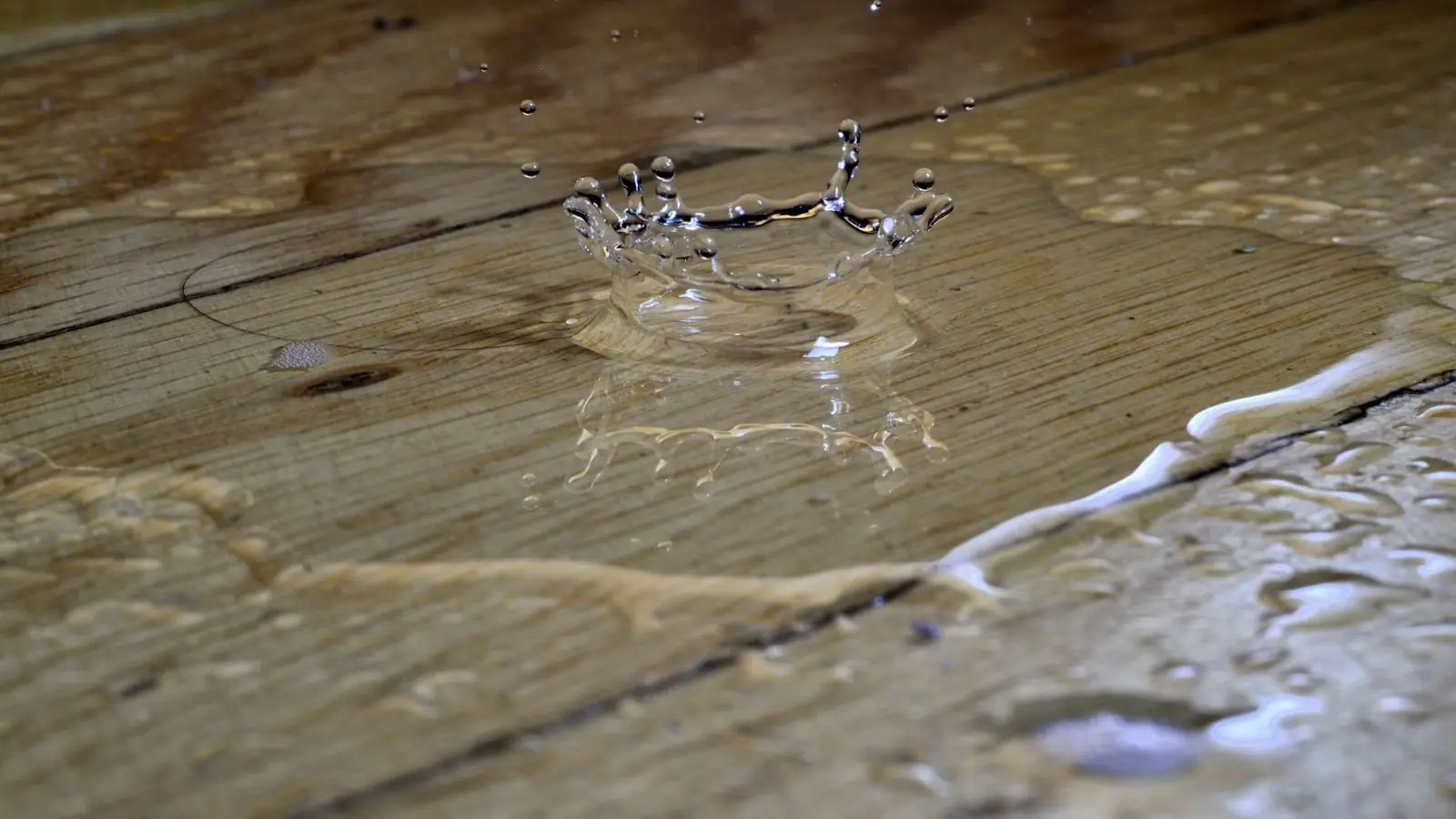
A water damaged wood floor in Addison, TX is not one problem. Solid hardwood, engineered wood, laminate and vinyl plank each absorb, swell or shed water in their own way, and the subfloor underneath often matters more than the boards on top.
This post sorts floor types by how they react, explains the subfloor and underlayment checks, and gives a simple rule for drying in place versus pulling the floor up.
Start by identifying what you are standing on
Look at a plank edge or a floor vent opening. Solid hardwood is one piece of wood, usually 3/4 inch thick, with a tongue and groove. Engineered wood shows a veneer of real wood over layers of plywood or fiberboard. Laminate is a photo layer over a fiberboard core, and vinyl plank has a flexible or rigid core with no wood fibers at all.
Knowing which you have changes everything. A technician will ask this first, because the answer sets the drying method, the time window and the odds of saving the material.
Floor type, reaction to water, usual outcome
These are general patterns, not promises. Water category, how long the floor stayed wet and what lies beneath all change the result.
| Floor type | Reaction to water | Usual outcome |
|---|---|---|
| Solid hardwood | Absorbs through seams and the underside, swells, may buckle if soaked for days | Often dried in place if caught early, replaced if boards have lifted or the subfloor is wet |
| Engineered wood | Plywood or fiberboard core swells at the edges, veneer can delaminate | Often replaced if the core is soaked, sometimes dried if only the surface got wet |
| Laminate | Fiberboard core swells and does not shrink back, edges peel | Usually replaced once the core has swollen |
| Vinyl plank (LVP) | The planks resist water, but moisture can sit underneath | Often lifted, dried underneath and reinstalled, or replaced if the locking edges are damaged |
| Any floor over wet subfloor | Moisture keeps feeding the planks from below | Subfloor drying decides the result for everything above |
Category 3 water (sewage or contaminated flood water) generally means porous flooring is removed, per ANSI/IICRC S500.
Solid hardwood: the most forgiving, up to a point
Real wood can lose moisture as well as take it on. A thin spill that is wiped up and fanned dry the same day often leaves no mark. The risk grows when water slips between boards and the finish seals it in.
For cupping and crowning patterns specifically, other guidance covers how the boards bend. Here the question is simpler: is the wood plus the subfloor below it dry enough to keep, or is it cheaper to replace?
Not sure if the floor can stay? Do not wait. Call the 24/7 line and describe what you see.
☎ (972) 945-2885Engineered and laminate: the core is the weak point
Both products rely on glued layers or compressed fiber. Once that core absorbs water, it swells and the fibers break down. Drying the surface does not shrink the core.
Engineered planks with a thick plywood core have a better chance than laminate with a fiberboard core. A floating floor can sometimes be lifted, dried and reinstalled if the planks have not swollen, but that depends on a hands-on inspection.
Vinyl plank: waterproof on top, not underneath
Many vinyl plank products are labeled water resistant, which describes the plank, not the space beneath it. Water that enters through a seam or from a leaking line can pool on the subfloor, and the plank then acts like a lid.
Mold and odor are the common concerns here, not swelling. A moisture check through a lifted plank at a seam or transition tells you more than looking at the top.
Subfloor and underlayment checks
These checks are what separate a floor that can be saved from one that cannot.
- Identify the subfloor. Plywood or oriented strand board over joists, or a concrete slab, behaves very differently. Slab homes hold moisture longer and cannot be opened from below.
- Take readings. A pin meter on wood, and a concrete moisture meter or calcium chloride test on slab, give numbers to compare against a dry reference area.
- Inspect the underlayment. Foam, cork or felt padding under floating floors holds water against the planks. Wet padding is usually removed.
- Check for a vapor barrier. A polyethylene sheet or adhesive barrier can trap water. Lifting a corner shows whether the space beneath is wet.
- Look at the edges. Baseboards, doorway thresholds and cabinet toe-kicks are where water hides. Pulling a baseboard near the wet area is often the fastest way to see the subfloor edge.
Dry in place or replace: a working rule
Professionals weigh these points together before recommending either path.
- Dry in place when the water was clean, the exposure was short, the subfloor reads dry or can be dried, and the planks have not changed shape.
- Replace when the water was sewage or flood water, when laminate or engineered cores have swollen, or when the subfloor stays wet after drying.
- Lift and reinstall when floating vinyl or click-lock planks are intact but the underlayment and subfloor need drying.
- Add specialty drying mats or panels when a hardwood floor is worth saving and air flow alone is not enough.
A technician documents moisture readings and photos, writes the scope, and explains price before work begins. Water damage repair covers the rebuild after a floor comes out, while drying equipment such as air movers and LGR dehumidifiers is part of water mitigation.
What this means in Addison
NWS Fort Worth reports that large hail, damaging winds, flooding and tornadoes occur nearly every year across the Dallas/Fort Worth area, with severe weather peaking in spring. A wet floor after a storm may come from a window or roof, not a pipe, so check where the water entered before you decide on the floor.
FEMA's Flood Map Service Center lets you look up the flood map for your address. Standard home policies do not cover floods, so that lookup is a practical step before you plan a rebuild, and it is worth asking your agent about separate flood coverage.
Source type: NWS Fort Worth climate pages and FEMA
Insurance and documentation basics
Sudden and accidental damage, such as a burst supply line, is often covered. Gradual leaks often are not, and floods are usually excluded unless you carry flood coverage. Check your policy and ask your insurer.
Photograph or film the floor before cleanup, keep a few damaged planks until the adjuster has seen them, and save receipts. Make temporary repairs to prevent more damage but hold off on permanent ones until the insurer inspects. Homes in Coppell and Carrollton follow the same steps.
What drives the cost of floor work
Price depends on the job in front of the crew, so an on-site look matters. Call the 24/7 line for a real number.
Frequently asked questions
Often, if the water was clean and the floor was dried quickly. Solid hardwood has the best odds, while laminate usually does not recover once the core swells.
A moisture meter reading compared with a dry area is the standard check. Signs include a musty smell, soft spots, or planks that feel cool and damp near edges.
The plank resists water, but water can still sit on the subfloor underneath. Lifting a plank at a seam is the quickest way to find out.
Removing a few planks to check underneath is reasonable. Pulling an entire floor before documenting it can hurt an insurance claim, so take photos first and ask your insurer.
Not always. Its plywood core can resist some movement, but edges swell and the veneer can lift. Thin fiberboard cores do worse.
Yes if the water came from outside. Home policies do not cover floods, so a separate flood policy is needed. Check the FEMA Flood Map Service Center for your address and ask your insurer.
Still have questions about this? Dispatch answers around the clock, and the dispatcher can explain next steps.
☎ (972) 945-2885