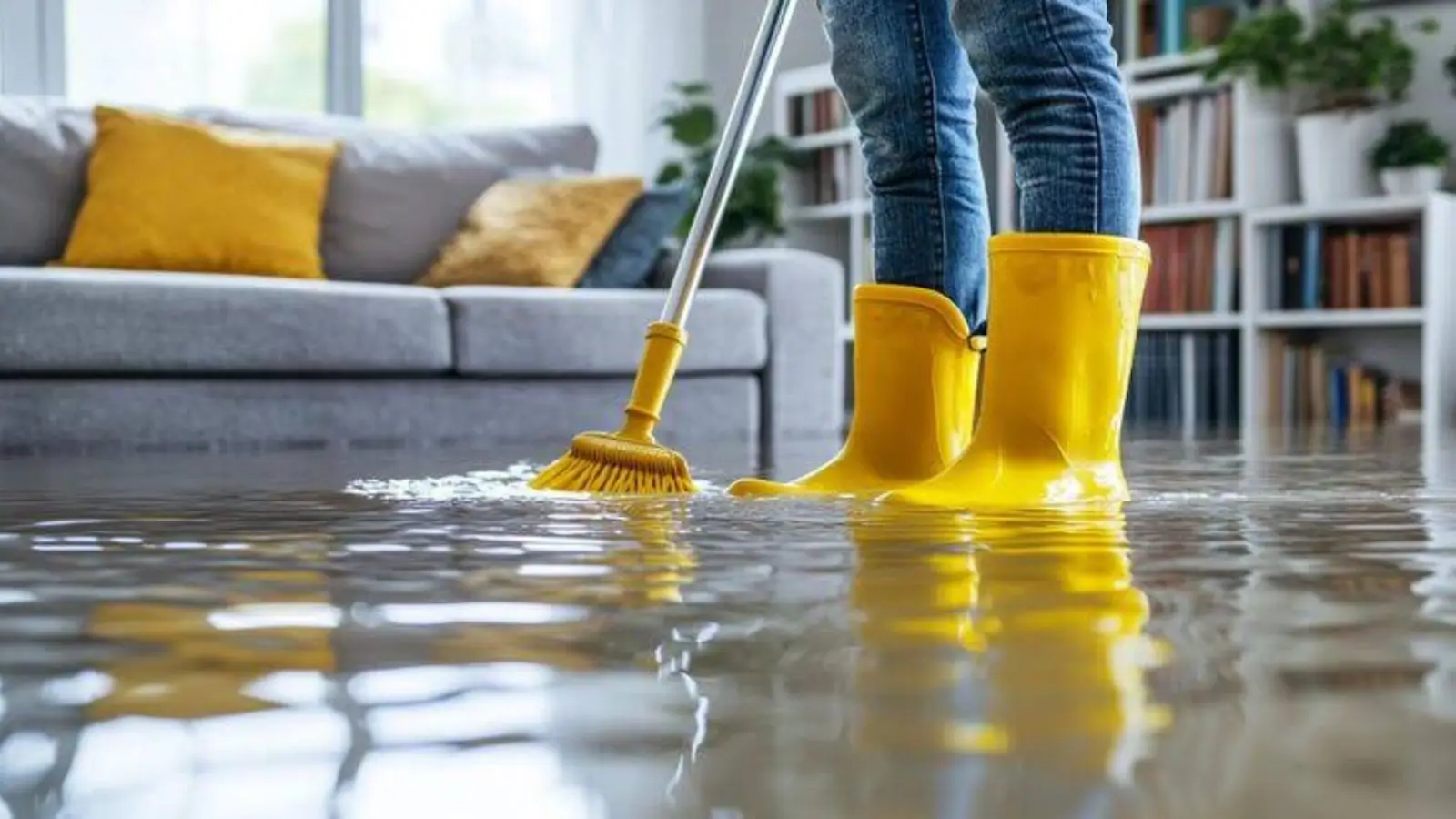
Water restoration in Addison, TX means returning a water-damaged home to a dry, clean, safe and livable condition. It is a sequence of phases, not one job: stop the damage, remove the water, dry the structure, clean what is salvageable, then repair or rebuild.
Quotes and phone calls get confusing because providers use different words for different slices of that sequence. Knowing the terms helps you compare offers and ask the right questions before anyone starts work.
The phases at a glance
Phases overlap in real jobs, but the order stays the same. Skipping ahead is the usual source of repeat problems.
| Phase | Goal | Typical work | Who is involved |
|---|---|---|---|
| Mitigation | Stop further damage and start drying | Source shutoff, extraction, air movers, dehumidifiers, moisture mapping, removal of unsalvageable wet material | Restoration technicians, sometimes a plumber for the source |
| Cleanup | Remove contamination and restore contents | Cleaning and sanitizing surfaces, pack-out of belongings, odor control | Restoration crew, contents specialists |
| Repair | Fix what was removed | Drywall, insulation, flooring patches, paint, texture | Repair crew, drywall and finish trades |
| Reconstruction | Rebuild larger sections | Framing, cabinets, full flooring, roof or wall rebuilds | General contractor, carpenters, specialty trades |
| Restoration (the whole) | Return the home to pre-loss condition | All of the above, coordinated | Project lead, adjuster if a claim is open, homeowner |
Some companies do all phases. Others do only mitigation or only rebuild.
Mitigation: stop it from getting worse
Mitigation is the emergency phase. A crew finds the extent of the water with moisture meters and a thermal camera, extracts standing water, and sets drying equipment. The aim is to limit what is lost, which is why it should start as soon as safely possible. Our water mitigation page covers the equipment and drying logs in more depth.
Mitigation can also include tearing out materials that cannot be dried in place, such as saturated padding or wet insulation. This is not demolition for its own sake. It lets air reach the framing so the structure can reach a dry standard.
Cleanup, repair and reconstruction
Cleanup deals with what the water touched. That can mean sanitizing surfaces, cleaning salvageable belongings, and controlling odor. If the water was dirty, cleanup is also a safety step, not just an appearance one.
Repair and reconstruction are the build-back. Repair usually means patching drywall, replacing insulation, laying flooring and painting. Reconstruction is bigger: moving walls, rebuilding cabinets, replacing subfloor. Our water damage repair team handles the interior side once drying is verified.
Why the order matters
Rebuilding over wet framing traps moisture inside new materials. That is how a repaired wall ends up with a musty smell or a new stain months later. A dry reading, logged and shown to you, is the gate between mitigation and repair.
Not sure which phase you need? Do not wait. Call the 24/7 line and describe what you see.
☎ (972) 945-2885The published standard behind the work
The industry reference is ANSI/IICRC S500, the standard for professional water damage restoration (Fifth Edition, 2021). It covers water categories, classes of loss, drying principles and documentation. It is a published standard, not a license.
Ask any company whether its crews work to S500. A good answer describes how they classify the water, set drying goals and record readings. A vague answer is information too. We do not claim a certification on anyone's behalf here, only that S500 is the document worth asking about.
Water categories in plain words
The category tells you how contaminated the water is, and that decides what can be saved.
Category 1: clean source
Water from a broken supply line, an overflowing sink with clean water, or a tub. It starts sanitary but does not stay that way for long.
Category 2: significant contamination
Water from a washing machine or dishwasher discharge, or clean water that has sat and picked up bacteria. Porous materials like carpet padding are often removed.
Category 3: grossly contaminated
Sewage, floodwater from outside, or standing water that has gone far past clean. Porous materials are generally removed, and people and pets should stay out.
Classes of loss and why the category can change
Category describes the water, and class describes how much and how fast it will dry. A small leak into one wall and a whole-floor soak need different equipment counts and different timelines.
Category can worsen over time. A clean supply-line break is Category 1 at first. If it runs through a ceiling, sits in insulation or goes unaddressed for a couple of days, it can move to a higher category. That is another reason to start early. TDI also notes that mold can start growing within a day after a leak.
Questions that show what a company actually does
Use these to see which phases you are being offered.
- Do you do mitigation only, or does your quote include repair and rebuild?
- Will you document moisture readings and photos at the start and each day after?
- Do your crews work to ANSI/IICRC S500?
- How do you classify the water category and the class of loss?
- Who coordinates with my insurer if I open a claim, and what do I still need to send?
- Are you licensed and insured, and who pulls any permits?
What drives scope and cost
Each factor changes the number of phases and how long each one runs.
Sudden and accidental damage is often covered by home insurance, while gradual leaks and neglect often are not. Flood damage is usually excluded and needs separate flood coverage. Check your policy or ask your insurer.
What this means in Addison
The Town of Addison water quality report says the Town purchases its water entirely from the City of Dallas. For a supply-line break, that means the water starts as treated drinking water and is typically Category 1. It still needs fast removal, because clean water that sits in insulation or padding moves up the categories.
On the rebuild side, the Town adopted the 2024 International Residential Code and 2024 International Plumbing Code with amendments for permits submitted on or after June 1, 2024. Contractors must register with the Town before starting a project. Ask who handles that, and whether your repair scope needs a permit.
Source type: Town of Addison water quality report and Development Services pages
Putting the terms to use
When someone asks if you need restoration, the useful reply is which phase. Homes in Carrollton and Richardson face the same sequence, and the same questions apply there.
Frequently asked questions
No. Mitigation is the first phase, which stops further damage and begins drying. Restoration is the whole process through repair and rebuild.
Cleanup removes contamination and treats surfaces and belongings. Repair rebuilds materials that were removed, like drywall, insulation and paint.
ANSI/IICRC S500 is the published standard for professional water damage restoration (Fifth Edition, 2021). Ask any company whether its crews work to it and how they apply it.
Category 1 is clean source water, Category 2 has significant contamination, and Category 3 is grossly contaminated, like sewage or outside floodwater. The category affects what can be dried and what must be removed.
It depends on the category, the area and the materials. Drying alone usually runs several days, with repairs after that.
The Town says it purchases its water entirely from the City of Dallas. A supply-line break therefore starts as clean treated water, but it should still be removed quickly before it becomes a higher category.
Still have questions about this? Dispatch answers around the clock, and the dispatcher can explain next steps.
☎ (972) 945-2885